What running a marathon does to the heart in the hours afterwards
A review of 69 studies and more than 3,200 runners finds that markers of heart-muscle strain rise after a marathon and heart function shifts temporarily. Whether any of it causes harm is still unknown.

Every autumn, hundreds of thousands of people run a marathon. A large review published in June in BMJ Open Sport & Exercise Medicine brings together what is known about what the race does to their hearts in the hours that follow.
What the researchers did
The team, led by cardiologists at Amsterdam University Medical Center, searched three databases for studies that measured healthy adults’ hearts before and after a road marathon. From more than 9,000 articles, 69 studies met their criteria, with 3,274 participants in total. Most were aged 30 to 55, and more than 80 per cent were men. Forty-nine studies had enough data for statistical pooling.
What they found
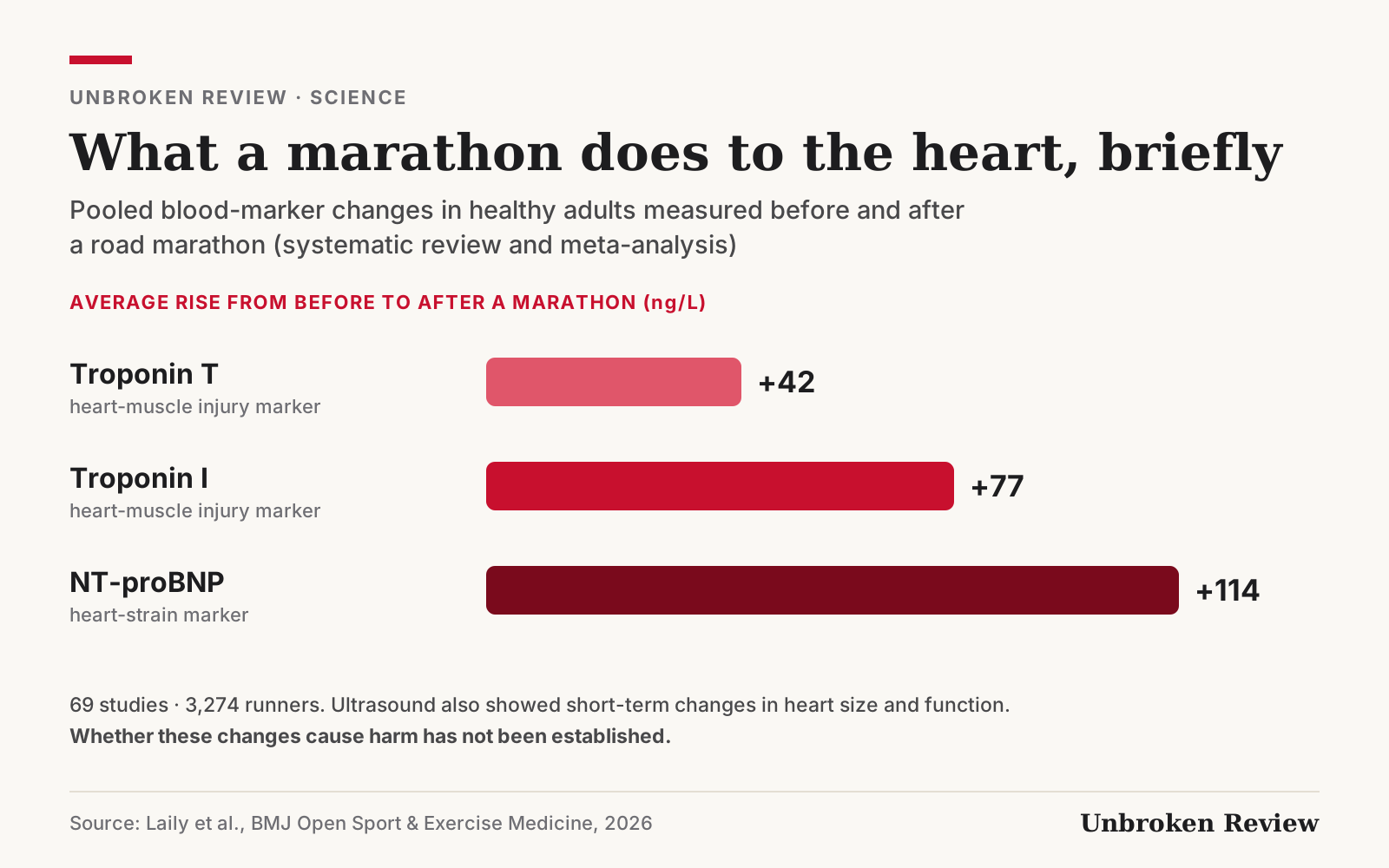
Blood markers rose. After the marathon, the average levels of three markers commonly used to detect heart-muscle damage or strain all increased:
- troponin T, by 42 ng/L
- troponin I, by 77 ng/L
- NT-proBNP, a marker of strain on the heart wall, by 114 ng/L
Heart structure and function shifted. On ultrasound, the left ventricle, the heart’s main pumping chamber, held slightly less blood and relaxed less efficiently after the race, and the right ventricle pumped less forcefully while getting larger. Cardiac MRI, by contrast, found the left ventricle ejecting a slightly larger fraction of its blood.
The size of these responses varied with age, sex, training status and how fast people ran.
What it means
The changes are real and measurable. But the review cannot say whether they matter. “The clinical significance and potential for harm of these changes are yet to be established,” the authors conclude.
That matters because a rise in troponin is one of the main ways doctors diagnose a heart attack. In marathon runners these rises typically occur without symptoms and are generally thought to be temporary, but they could complicate the assessment of a runner who does develop chest pain after a race.
This review looks only at the hours around one race. It sits alongside longer-term research, including a 10-year study of marathon runners’ hearts we reported earlier, which looks at what years of training do.