Two breathing “hacks” put to the test. Neither made athletes faster
Hyperventilating before sprints changed blood chemistry as intended but did not improve performance. Four weeks of nasal-only breathing training lengthened breath-holds but did not raise aerobic fitness.

Breathing techniques are among the most popular performance tips on social media: breathe hard before an effort to “buffer” acid, or breathe only through the nose to train the body to use oxygen better. Two controlled studies have tested versions of both ideas. Neither improved performance.
Hyperventilating before sprints
Hard exercise makes the blood more acidic, which contributes to fatigue. Breathing rapidly before an effort blows off carbon dioxide and makes the blood slightly more alkaline, so, the theory goes, it should delay that acidity.
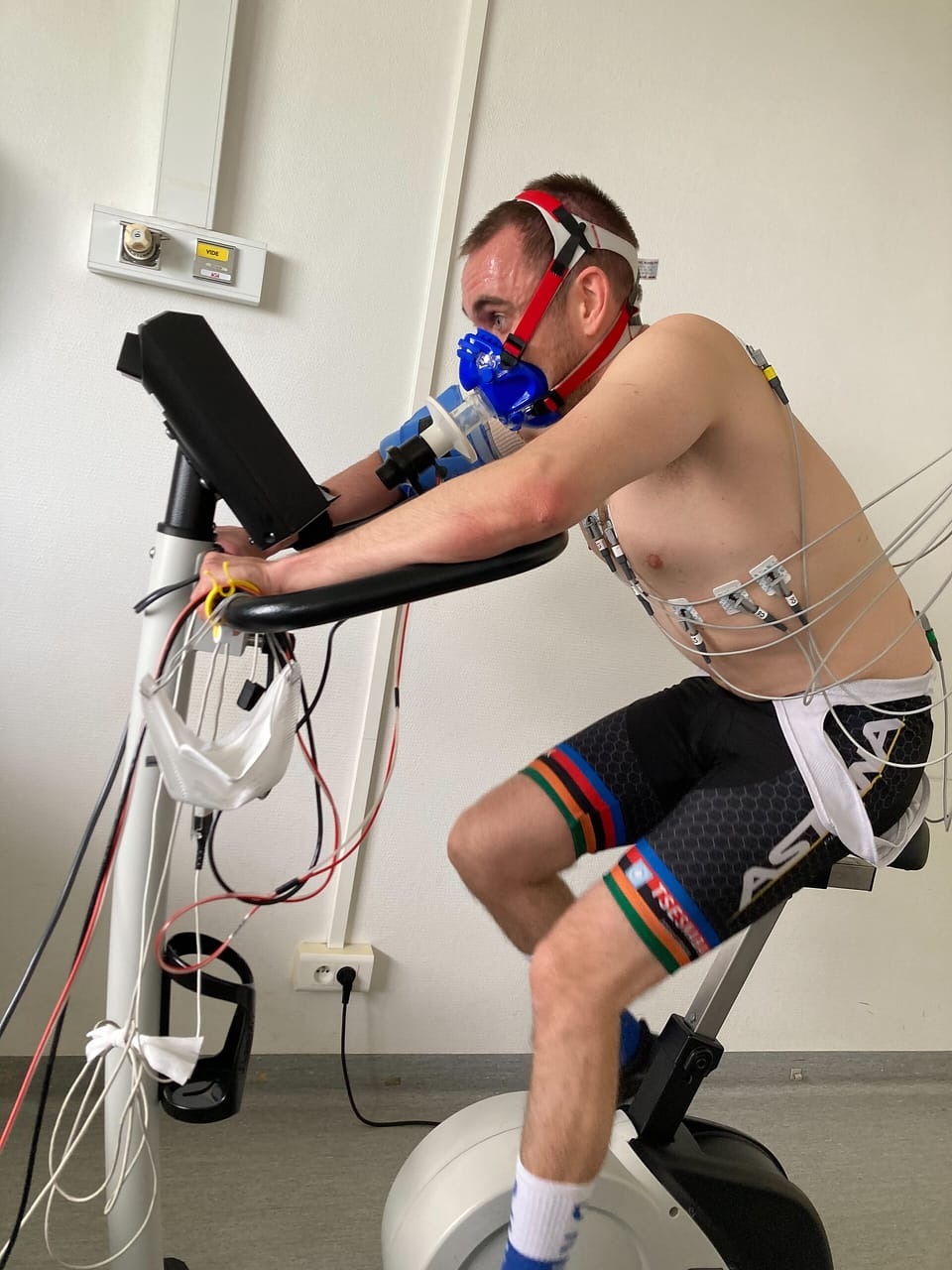
Researchers at Charité – Universitätsmedizin Berlin tested a practical version of the idea in 36 recreational athletes aged 18 to 40. Each ran a series of three hard uphill treadmill sprints on two separate days, once after a hyperventilation protocol and once without. The order was randomised.
The breathing worked as intended on the chemistry. Athletes exhaled far more carbon dioxide during hyperventilation (32.8 vs 21.5 mL per kg of body weight), and the carbon dioxide level in their exhaled breath fell sharply.
But performance did not change. The total height climbed during the sprints was 83.2 m after hyperventilation and 84.3 m without it: no meaningful difference. Blood lactate and pH after the sprints were the same in both conditions. Participants found the breathing unpleasant and felt it hurt their performance. The authors, writing in Experimental Physiology in May, “discourage its application”.
Breathing through the nose
A separate study, published in the journal Sports, tested a four-week “functional breathing” programme in 16 recreational runners. Eight added daily breathing exercises and breathed only through the nose during easy runs; eight followed the same running programme without them.
The breathing group’s breath-hold time improved by 11.7 seconds, against 1.9 seconds in the control group. But the changes in VO2max, with normal breathing or nasal-only, did not differ between the groups. Both groups’ VO2max rose by about 3 per cent, a result of the running training itself.
What to take from this
Both studies were small, used recreational athletes and lasted days or weeks, so they do not rule out effects in other settings. In both, the techniques changed how people breathed without changing how well they performed.
There is better evidence for slow breathing as a way to influence the nervous system and relaxation, which we have covered separately. That is a different goal from running faster.