ScienceExplainer
A marathon temporarily weakens the heart’s right side. Ten years of racing did not, study finds
German researchers followed 152 recreational marathon runners for a decade. The right ventricle’s pumping dropped after a race and recovered within days, and was no worse ten years later.

Running a marathon puts the heart under unusual strain, and for years one of the open questions in sports cardiology has been whether that strain adds up. In particular, researchers have wondered about the right ventricle (the chamber that pumps blood to the lungs, which works especially hard during prolonged exercise) and about troponin, a protein released from heart muscle that often rises after endurance events.
A study published in January in JAMA Cardiology offers some of the best long-term evidence yet, and it is broadly reassuring.
What the researchers did
Researchers at the Technical University of Munich and the University Hospital Zurich studied male recreational marathon runners recruited at a single centre in Germany. They measured heart function with three-dimensional echocardiography and took blood samples before a marathon, immediately afterwards, and one and three days later. Then, ten years on, in 2019, they examined the same runners again.
In all, 152 men, with a reported average age of 43, were included in the analysis. In the decade between, they had continued to train and race.
What they found
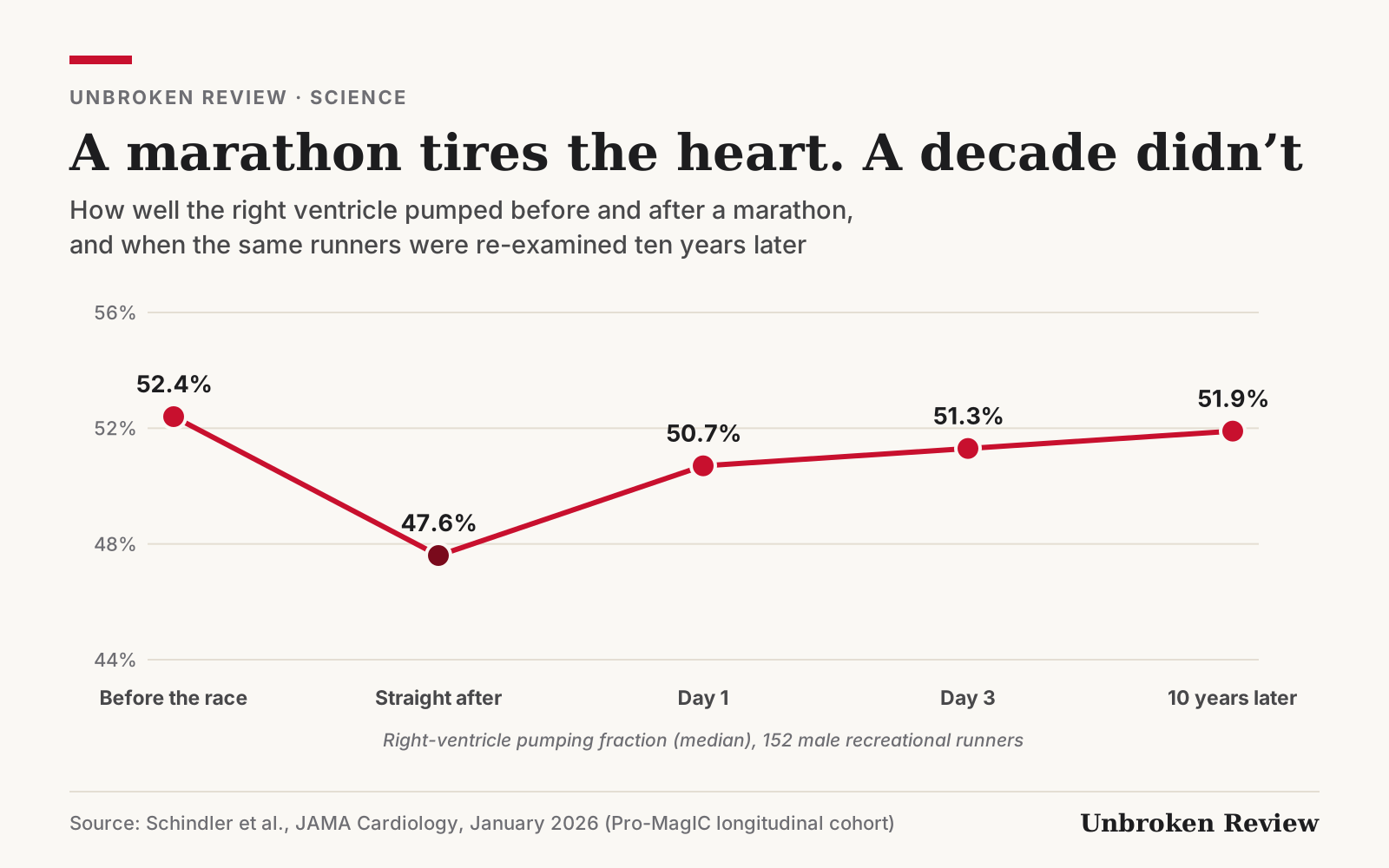
After the race: the right ventricle’s ejection fraction, the share of blood it pumps out with each beat, fell significantly, from a median of 52.4 per cent before the marathon to 47.6 per cent immediately afterwards. It was still slightly lower a day later (50.7 per cent) but had returned to normal by day three (51.3 per cent).
Ten years later: right ventricular function was no different from before the original race, at a median of 51.9 per cent.
Troponin: the rise in troponin T after the marathon did not predict any change in heart function a decade later.
The left side: left ventricular ejection fraction did fall slightly over the ten years (from 59.6 to 57.6 per cent), and an index of left-ventricular filling pressure rose slightly. Both stayed within normal limits.
The authors concluded that repeated strenuous training and racing did not cause long-term deterioration of right ventricular function in most recreational male endurance athletes.
What it means
For the many recreational runners who worry that marathon training might be quietly harming their heart, this is good news. The short-term dip in right-ventricle function after a race is real, but in this group it recovered within days and did not accumulate over ten years.
It is also a reminder of what the days after a marathon are for. A heart that is measurably below its normal function the day after a race is a heart in recovery. Easy days after a marathon are not lost training. They are the period in which the body restores what the race took.
Anyone with symptoms such as chest pain, fainting or palpitations during or after exercise should seek medical advice; this study does not change that.