ScienceExplainer
Low-carb and keto diets in endurance athletes: the first week is the hardest, a review finds
Across 33 studies, fat burning rose in every case and maximal fitness was usually preserved. Economy often got worse, performance dipped in the first week, and the authors still recommend carbohydrate for competition.

Few questions in sports nutrition divide athletes like carbohydrate. Mainstream guidance says endurance athletes need plenty of it. A vocal minority argues that training the body to run on fat, through low-carbohydrate or ketogenic diets, is better, especially for very long events.
A systematic review published in February in Nutrients by researchers at the Institute of Sport Sciences in Katowice, Poland, brings together the trials.
What the researchers did
They gathered 33 studies of trained athletes (at least six months of structured training, aged 18 to 45), who were assigned to a low-carbohydrate diet (130 g a day or less, or 25 per cent of energy or less), a ketogenic diet (under 50 g a day, or under 10 per cent of energy) or a high-carbohydrate comparison. They examined VO2max, time trials, time to exhaustion, economy and fat burning.
What they found
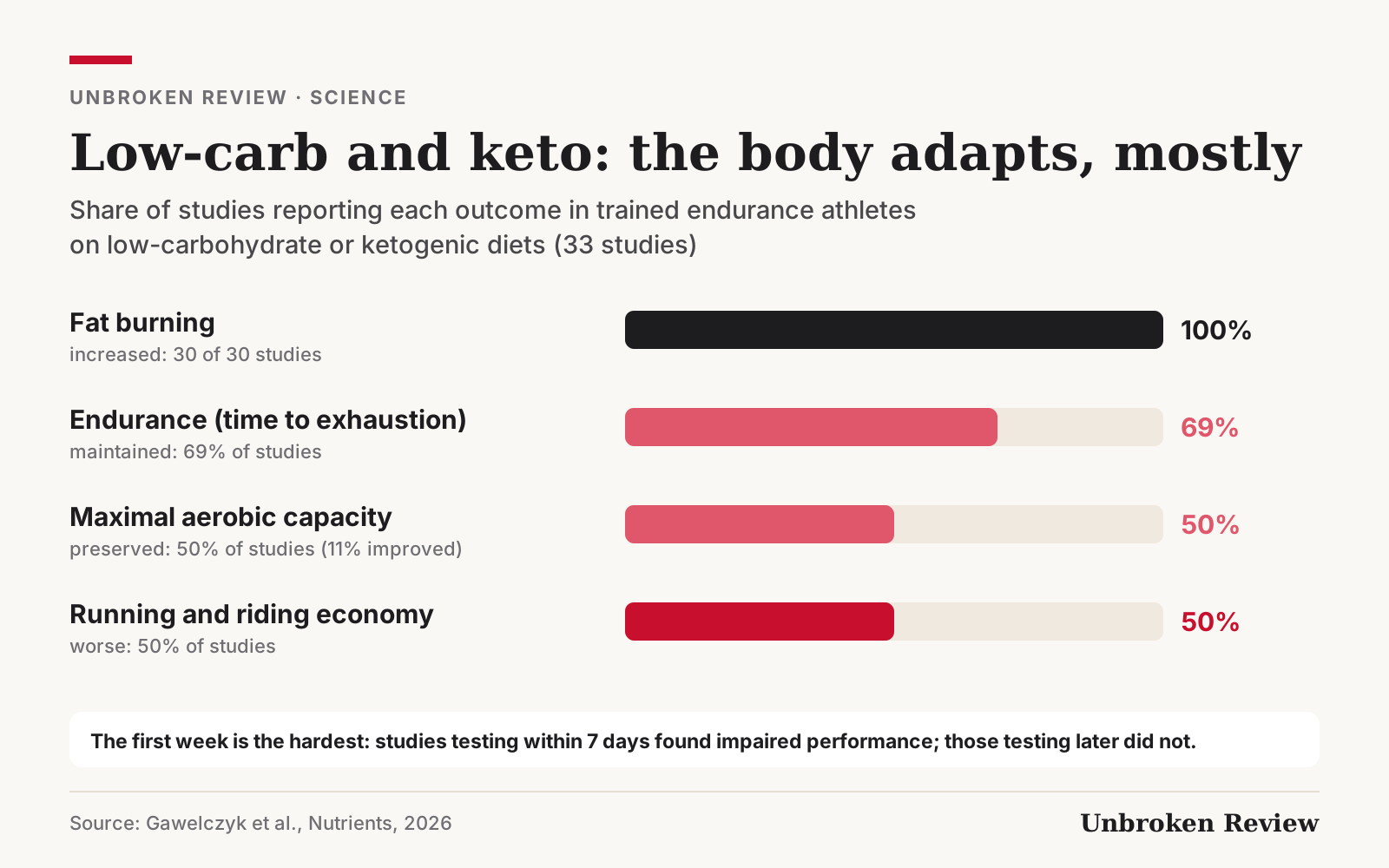
- Fat burning increased in every study that measured it, all 30, by between 28 and 200 per cent.
- Maximal aerobic capacity (VO2max) was preserved in half the studies and improved in 11 per cent.
- Time to exhaustion was maintained in 69 per cent of studies.
- Economy, how much energy it costs to run or ride at a given pace, got worse in half the studies, the most sensitive measure.
The clearest pattern was timing. Studies that measured performance within the first seven days of the diet found impairment; those that measured after more than a week generally found performance maintained or improved. The authors describe a “1-week adaptation threshold”.
How to read it
The review shows that the body adapts: fat-burning capacity rises dramatically and fitness is largely preserved after the first week. It does not show that low-carbohydrate diets make athletes faster. Worse economy matters in endurance racing, and high-intensity efforts rely heavily on carbohydrate.
The authors’ own conclusion is pragmatic: the evidence “supports periodized carbohydrate strategies balancing metabolic adaptation benefits from low-carbohydrate training phases with carbohydrate requirements during competition”. In plain terms, some lower-carbohydrate training may have a place, but fuel properly for racing.
A separate small study, published in July, found that taking a ketone-producing supplement with carbohydrate did not improve endurance performance in nine male athletes who were already fully adapted to a ketogenic diet.