Four in five elite female endurance athletes at risk of energy deficiency, Finnish study finds
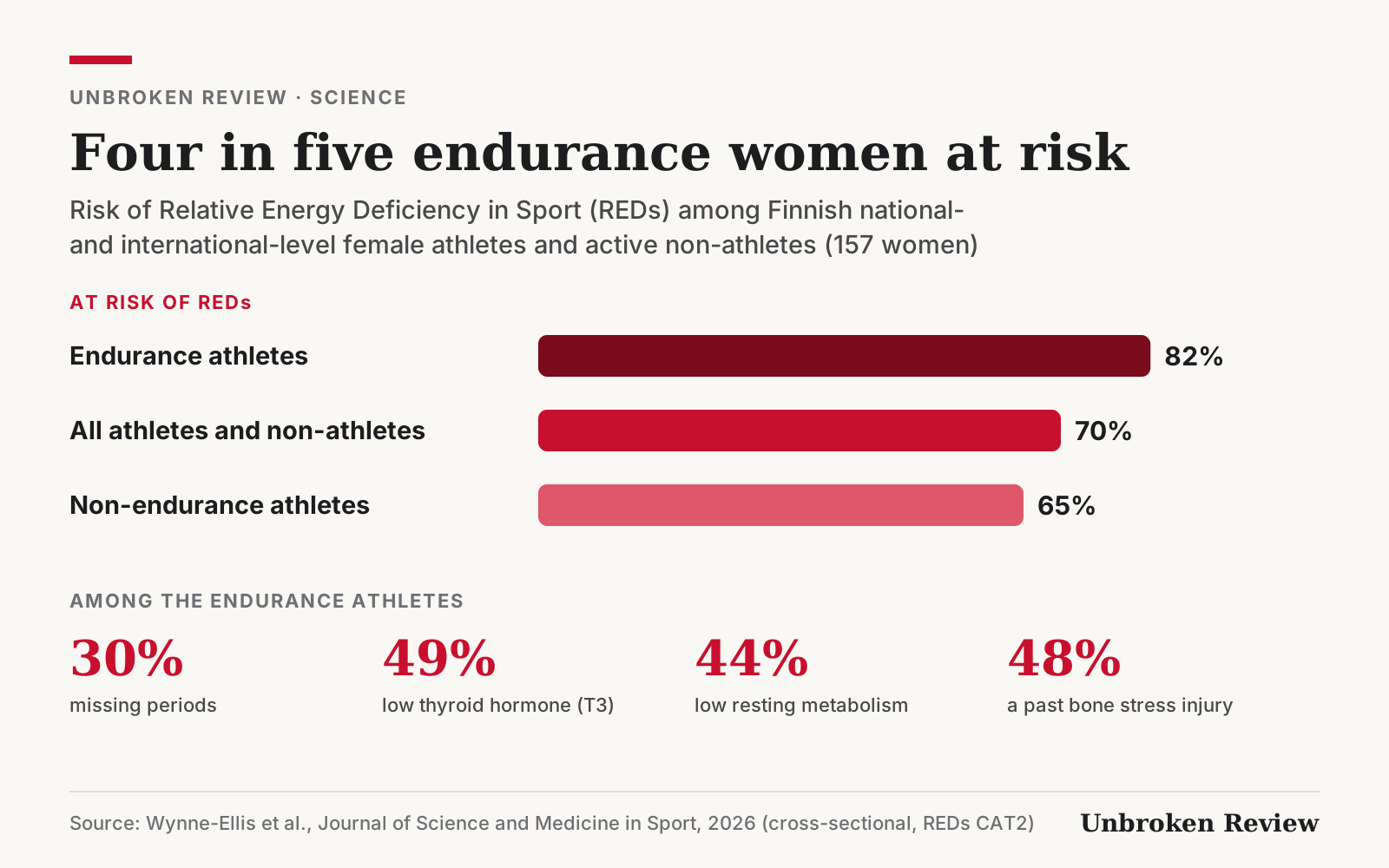
Using the latest clinical assessment tool, researchers found signs of Relative Energy Deficiency in Sport in 82 per cent of national- and international-level endurance athletes, including missing periods, low thyroid hormone and bone stress injuries.

Relative Energy Deficiency in Sport, REDs, describes what happens when athletes do not eat enough to cover both their training and the rest of what their bodies need to function. Over time, low energy availability can disrupt hormones, menstrual cycles, metabolism, bone health and performance.
A study published in September in the Journal of Science and Medicine in Sport suggests the problem is common among Finland’s top female athletes, and most common in endurance sport.
What the researchers did
The team, from the University of Eastern Finland, the University of Jyväskylä and partner institutions, studied 157 women: 50 endurance athletes, 50 speed and power athletes, 37 team and interval-sport athletes, all competing at national or international level, plus 20 active women who were not athletes.
They assessed REDs risk using the International Olympic Committee’s REDs Clinical Assessment Tool, version 2, which combines clinical, hormonal, metabolic and bone-health indicators into four levels of risk.
What they found
- 70 per cent of all participants were at some level of REDs risk.
- Among endurance athletes, 82 per cent were at risk, compared with 65 per cent of the other athletes, giving endurance athletes 2.4 times the odds of being at risk.
- 18 per cent of endurance athletes were in the most severe risk category. None of the non-athletes were.
The endurance athletes also showed the least favourable profile on individual markers:
- 30 per cent reported amenorrhoea (missing periods).
- 49 per cent had low levels of the thyroid hormone T3, a sign the body is conserving energy.
- 44 per cent had a low resting metabolic rate relative to what would be predicted.
- 48 per cent reported a past bone stress injury, as did half of the speed and power athletes, compared with fewer than one in five in the other groups.
Why it matters
REDs is not only a performance problem. Missing periods and low energy availability are linked to lower bone density, and bone stress injuries can end seasons and, in young athletes, affect bone health for life.
Endurance sports carry particular risk because training volumes are high, and because cultures in some sports still associate lightness with speed. The study’s finding that the problem was most common in the most accomplished endurance athletes (national and international level) is a reminder that being successful is no guarantee of being healthy.
What athletes and coaches can do
The signs listed in the study are a useful checklist. A missing or irregular period is not a normal consequence of hard training; it is a signal to talk to a doctor. Recurrent bone stress injuries, persistent fatigue and stalled progress despite good training are others.
Fuelling is part of training, not separate from it. For athletes who train a lot, eating enough (before, during and after sessions, and on rest days) is one of the foundations that makes everything else possible.
This article is for general information. Anyone concerned about REDs should speak to a doctor or registered sports dietitian.