ScienceExplainer
Five more minutes of sleep and two of brisk activity: the small changes linked to an extra year of life
A study of 59,078 adults measured sleep and activity with wrist sensors rather than questionnaires, and asked how little people would need to change to see a difference. The answer was surprisingly little, with important caveats.

Most health advice asks for a lot: eight hours of sleep, 150 minutes of exercise a week, five portions of fruit and vegetables a day. For people who are a long way from those targets, the gap can feel too big to start closing.
A study published this year in eClinicalMedicine asked a different question: what is the smallest combined change in sleep, physical activity and diet that is linked to a meaningfully longer life?
What the researchers did
The team, led by Nicholas Koemel and Emmanuel Stamatakis at the University of Sydney, used data from 59,078 people in the UK Biobank study. Between 2013 and 2015, participants wore a wrist accelerometer for seven days, which measured how long they slept and how many minutes they spent in moderate-to-vigorous physical activity, the kind of activity that makes you breathe harder, such as brisk walking or running. Diet was scored from a questionnaire on a scale of 0 to 100.
The researchers then followed participants for a median of 8.1 years, recording deaths and diagnoses of cardiovascular disease, cancer, type 2 diabetes, chronic obstructive pulmonary disease and dementia, and used life tables to estimate lifespan and “healthspan”: years lived free of those diseases.
What they found
The gap between the healthiest and least healthy habits was large. People in the most favourable group (7.2 to 8 hours of sleep a day, more than 42 minutes of moderate-to-vigorous activity a day and a good diet score) had an estimated 9.4 more years of life, and 9.5 more years free of major disease, than those in the least favourable group.
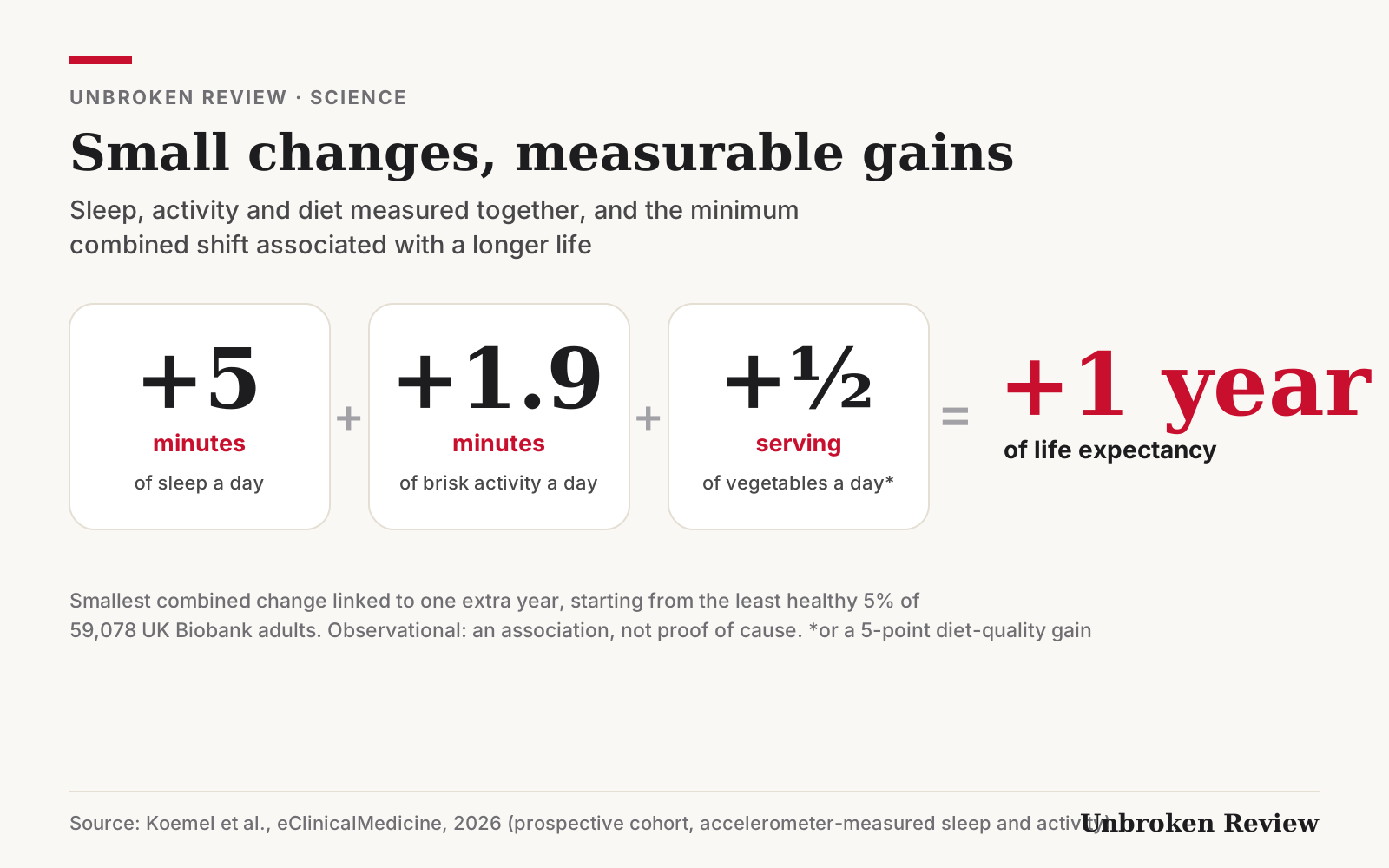
But the headline finding was about small steps. Starting from the least healthy 5 per cent of participants, the minimum combined improvement associated with one extra year of life was:
- 5 more minutes of sleep a day
- 1.9 more minutes of moderate-to-vigorous activity a day
- a 5-point improvement in diet score: equivalent, for example, to an extra half-serving of vegetables or one and a half servings of whole grains a day.
For healthspan, a larger combined change (24 more minutes of sleep, 3.7 more minutes of activity and a 23-point diet improvement) was associated with four extra years free of major disease, though with a wide margin of uncertainty.
How to read it
This is an observational study. It shows associations, not cause and effect. People who sleep, move and eat a little better may differ in many other ways (income, health, stress) that the researchers could adjust for only partly. People who are already unwell may sleep and move less because they are unwell. The participants were also older, median age 64 at recruitment, and UK Biobank volunteers tend to be healthier than the general population.
The tiny numbers should be read in that light. The finding is not that two minutes of exercise adds a year of life. It is that, for people starting from a very low base, the combination of modest improvements across sleep, activity and diet appears to matter, and that these behaviours are best thought of together rather than one at a time.
The study was funded by Australia’s National Health and Medical Research Council. Several authors disclosed relationships with companies, including makers of obesity medicines and sleep-apnoea devices and a company that promotes physical activity.
What it means
For athletes, the lesson is less about the minutes and more about the combination. Sleep, training and nutrition interact: an extra session that costs sleep may not be a net gain. For anyone who feels too far from the ideal to begin, the study offers a more encouraging message than most: small, combined changes appear to be worth making.