No recovery method beat simply resting, new analysis of endurance trials finds
A network meta-analysis of every randomised trial in competitive endurance athletes found that no physical recovery method outperformed passive rest on any outcome measured. A fake treatment did as well as the real ones.

Endurance athletes spend a great deal of time and money on recovery: ice baths, compression garments, massage, electrical muscle stimulation, active cool-downs. A new analysis of the randomised trials of physical recovery methods in endurance athletes has reached a blunt conclusion: none has been shown to beat simply resting.
The study, published in August in Frontiers in Sports and Active Living by researchers in Chongqing and Shanghai, is a network meta-analysis, a method that pools trials comparing different treatments so that they can all be ranked against a common reference. Here the reference was passive recovery: doing nothing in particular.
The authors searched four major databases up to 1 April 2026 for randomised controlled trials of physical recovery methods in competitive endurance athletes. Sixteen trials, involving 273 participants, met their criteria.
What they found
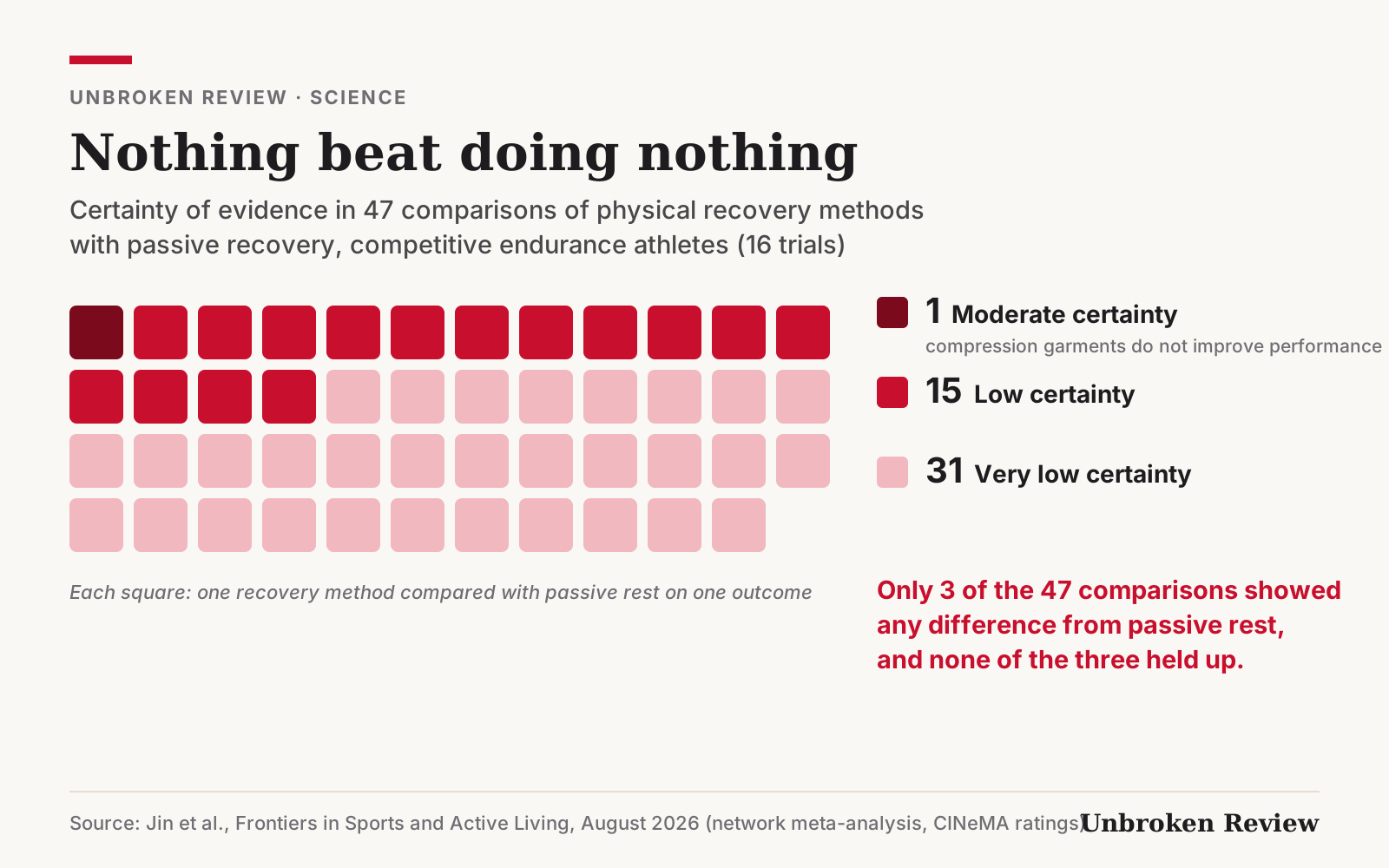
Across eight outcomes, including muscle soreness, creatine kinase (a blood marker of muscle damage) and sport-specific performance, the analysis made 47 comparisons between a recovery method and passive rest.
Only three of those 47 comparisons showed any statistically detectable difference, and the authors judged that none of the three was robust: two rested on a single trial, and all three came from networks that pooled measurements that were not really comparable.
- Muscle soreness: no method beat passive recovery (five trials). The authors note that the result for soreness reverses if two of the five trials are removed, a sign of how fragile the evidence is.
- Creatine kinase: no method beat passive recovery (four trials).
- Performance: no method beat passive recovery (eleven trials). For compression garments, active recovery and electrical stimulation, the confidence intervals were narrow enough to rule out a meaningful benefit or harm, an “informative null”, in the authors’ words.
The single finding rated as moderate certainty was that compression garments do not improve performance.
The sham that did as well as everything else
The most striking detail involves a placebo. The network included a sham treatment: immersion in water at a neutral temperature, designed to feel like a treatment without having the physiological effects of cold or heat. In the network, that sham ranked at or above every active recovery method on all three main outcomes.
That matters because athletes in recovery trials almost always know which treatment they are getting. The authors argue that, in this literature, it is impossible to separate expectation (believing a treatment helps) from any genuine physiological effect.
How strong is the evidence?
Not very, and that is the point. Using a formal rating system, the authors judged certainty to be very low for 31 of the 47 comparisons and low for 15. The evidence base was also thinner than the trial count suggests: 35 of the 55 treatment points in the networks (64 per cent) rested on a single trial, and when the analysis was restricted to confirmed elite athletes, half of the outcomes could not be analysed at all.
This is consistent with a 2024 umbrella review of recovery strategies in endurance athletes, which also found no strategy with consistent benefits.
What it means for athletes
The study does not say recovery is unimportant: quite the opposite. Passive recovery, the method everything was compared against, is recovery: time, rest and, by implication, the sleep, food and lower training stress that allow the body to adapt.
What the evidence does not support is the idea that a gadget or protocol layered on top of that rest reliably speeds the process. For athletes with limited time and money, the practical implication is to protect the basics first, and to treat any additional recovery tool as a matter of preference rather than proven performance gain.
The authors declared no commercial or financial conflicts of interest.