ScienceExplainer
Strength and mood shifted across the menstrual cycle, but no two athletes followed the same pattern
A study tracking 18 athletes through six hormonally confirmed cycle phases found clear group-level changes in strength and mood. Its authors’ conclusion is that the template matters less than the individual.

Cycle-syncing, planning training around the phases of the menstrual cycle, has moved from sports-science journals into apps, social media and coaching plans. The research underneath it has been harder to pin down, partly because many studies estimated cycle phases from calendar dates rather than measuring hormones.
A study published in April in Scientific Reports tried to do it properly, and its findings support a more personal approach than most cycle-syncing advice.
What the researchers did
A team from Hannover Medical School and partner institutions in Germany followed 18 female athletes from a range of sports, aged 18 to 30, all with regular cycles. Each was tested in six phases of the cycle, confirmed by hormone measurements rather than estimated from the calendar.
At each visit the researchers measured maximal strength in the half squat, isometric grip strength, mood (using a standard questionnaire covering fatigue, depression, vigour and other states), motivation, sleep quality and perceived exertion.
What they found
At the group level, several measures changed across the cycle:
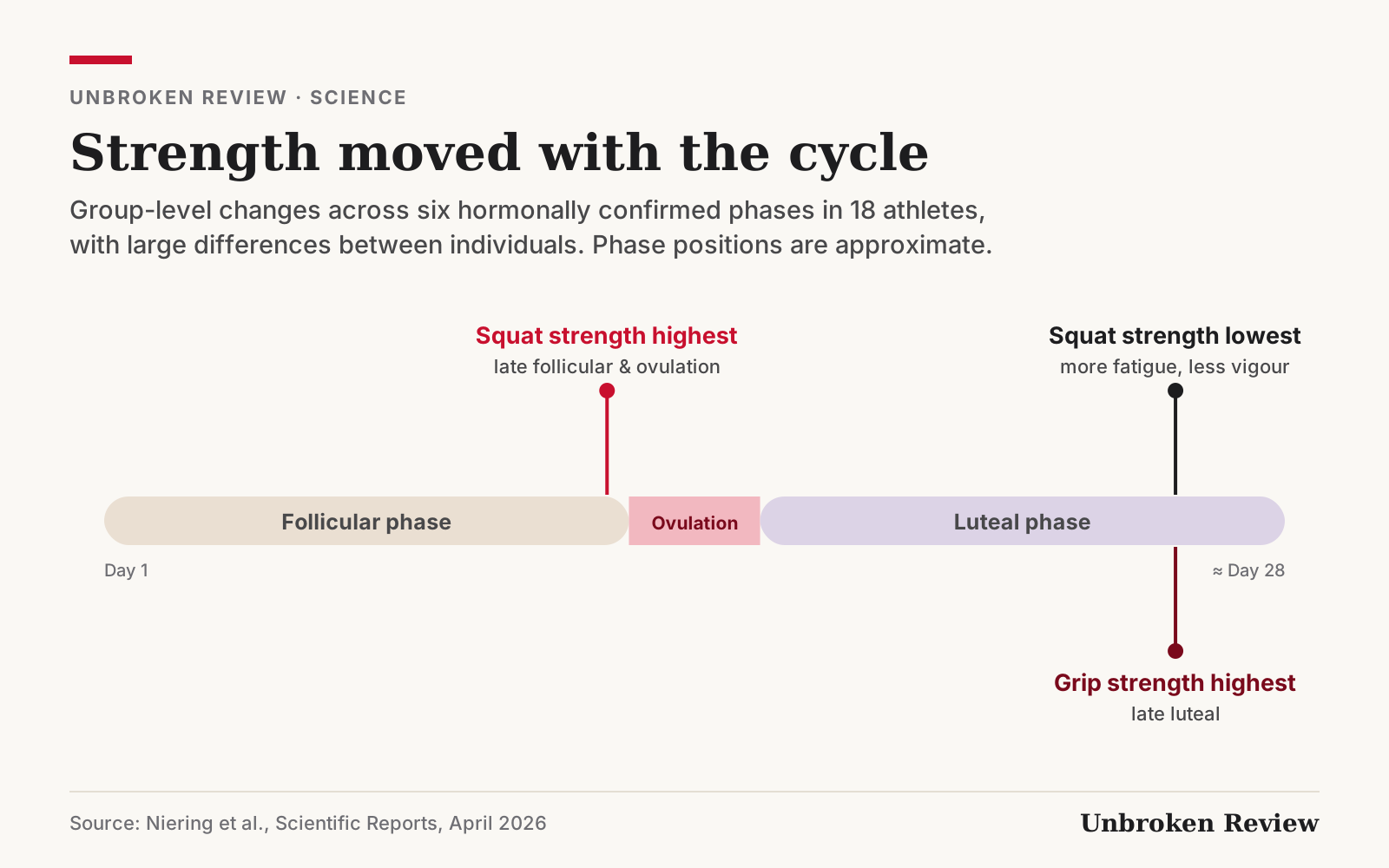
- Half-squat strength peaked in the late follicular phase and around ovulation, and was lowest in the late luteal phase, the days before menstruation.
- Grip strength showed the opposite pattern. It was highest in the late luteal phase.
- Mood shifted in the late luteal phase, with higher fatigue and depression scores and lower vigour.
- Motivation, sleep quality and perceived exertion did not change significantly across the phases.
At the individual level, athletes whose squat strength was lower also tended to report higher depression scores on the questionnaire, a strong correlation (r = −0.60).
The catch: individual variation
The authors stress that while changes were detectable at the group level, the differences between individuals were substantial. That fits the wider literature. A 2020 meta-analysis in Sports Medicine by Kelly McNulty and colleagues concluded that performance may be trivially reduced in the early follicular phase on average, but that the effects were small, the evidence was of low quality, and a personalised approach was more appropriate than general guidelines.
A review of menstrual-health interventions in athletes, published in June in the journal Sports, reached a similar conclusion from a different angle: benefits were seen more consistently in how athletes felt and recovered than in objective performance, and the evidence was too limited and varied to support strong recommendations.
What it means
The authors’ recommendation is not a phase-by-phase training template. They suggest a “pattern-oriented and individually adaptive” approach: helping athletes and coaches understand the cycle, and tracking a small number of informative markers, such as a strength measure and a simple wellbeing score, to see how each individual responds, adjusting training load accordingly.
For athletes, the practical message is to treat the cycle as one more source of information about readiness, alongside sleep, stress and training load, rather than a fixed schedule. Logging how you feel and perform across a few cycles will tell you more about your own pattern than any generic plan.