ScienceExplainer
Why elite cyclists are training in heat suits after altitude camps
In a Norwegian study, riders who swapped three sessions a week for heat-suit training kept the extra haemoglobin they had built at altitude. Riders on normal training lost most of it within a month.

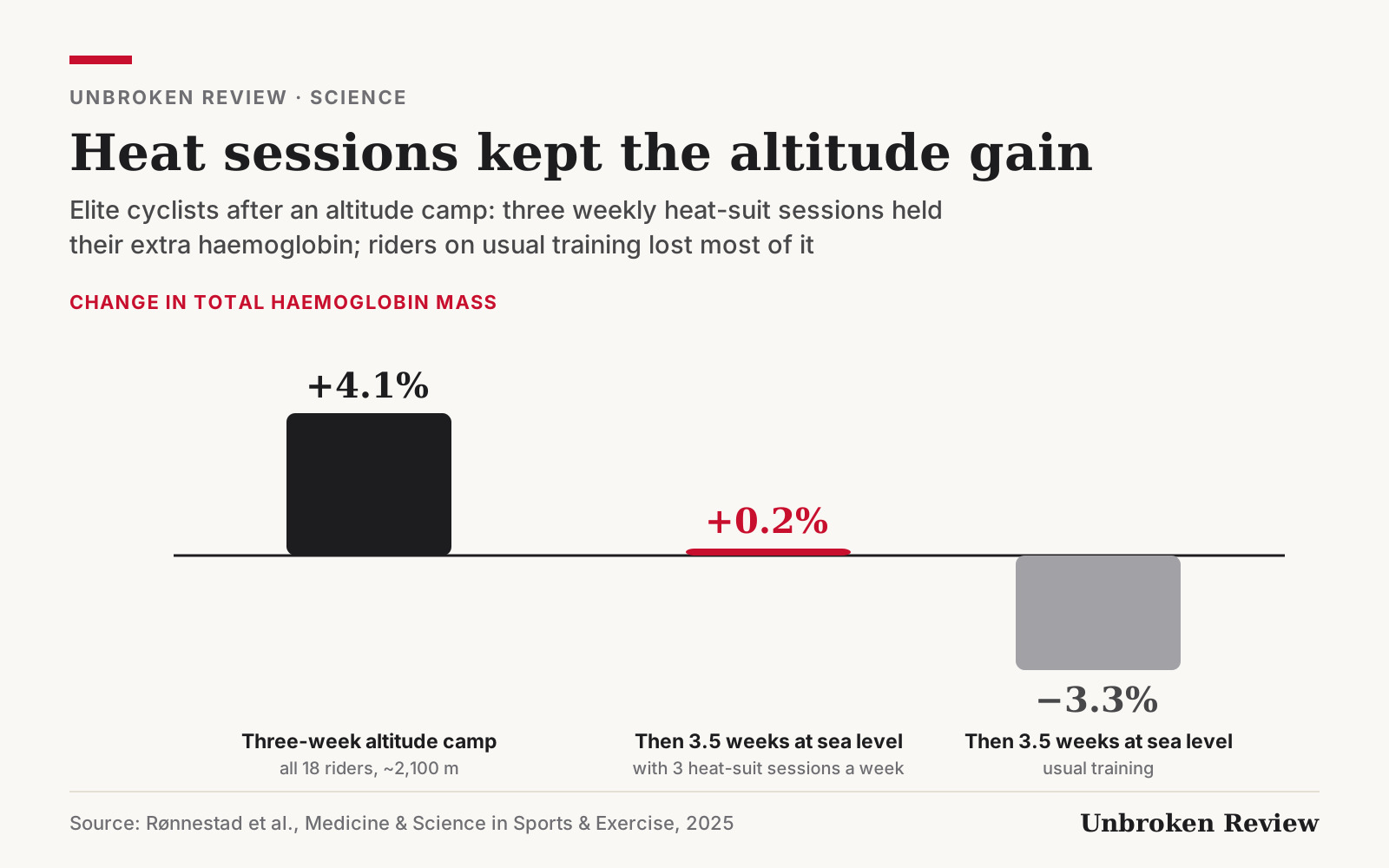
Altitude camps are expensive and disruptive, and their main prize (extra haemoglobin, the oxygen-carrying protein in red blood cells) starts to fade as soon as athletes come back down. A study from Norway suggests a cheaper tool can hold on to it: training in a heat suit.
What the researchers did
Bent Rønnestad and colleagues at Inland Norway University of Applied Sciences in Lillehammer took 18 elite male cyclists, with an average VO2max of 76 mL/kg/min, to a three-week altitude camp at about 2,100 metres.
After the camp, the riders were split into two groups for three and a half weeks at sea level:
- Heat group: replaced three of their usual sessions each week with heat-suit training: exercising in clothing designed to trap body heat.
- Control group: continued their usual training.
Training intensity and overall load were similar between the groups.
What they found
The altitude camp raised total haemoglobin mass by 4.1 per cent across the group.
Over the following three and a half weeks, the heat group kept that gain: haemoglobin mass changed by just 0.2 per cent. The control group lost 3.3 per cent, most of what the camp had added.
The heat group’s plasma volume also rose by 11.6 per cent and blood volume by 5.8 per cent, compared with a 5.5 per cent rise in plasma volume in the control group.
Why it matters
More haemoglobin means more oxygen can be carried to working muscles, which is why altitude training is so widely used. Heat suits offer a way to extend the benefit at home, without the cost of another camp, and some professional teams now use heat training as part of their preparation for major races.
The caveats
This was a small study of 18 elite men, and it measured blood, not race performance. Heat training is also a stressor: it raises heart rate and core temperature and can be dangerous if overdone. In this study the heat sessions replaced normal training rather than being added to it.