ScienceExplainer
Five-minute “exercise snacks” improved fitness in inactive people, review finds
Short bouts of vigorous movement spread through the day produced a large gain in aerobic fitness across 11 randomised trials. They did not move blood pressure, cholesterol or body composition.

The most common reason people give for not exercising is time. A growing body of research has asked what happens if exercise is broken into pieces so small that time stops being an excuse: a few minutes of stair climbing, cycling or bodyweight exercise, done several times a day. Researchers call them “exercise snacks”.
A meta-analysis published in January in the British Journal of Sports Medicine pulls the randomised evidence together for the people who stand to gain most: adults who do little or no exercise.
What the researchers did
The team, from the University of Oviedo in Spain with collaborators in France, Denmark and the UK, searched seven databases for randomised controlled trials comparing exercise snacks with no exercise in physically inactive adults and adults over 65.
They defined an exercise snack as a structured bout lasting five minutes or less, done at least twice a day, at least three days a week, for at least two weeks. Eleven trials, with 414 participants, met the criteria. Programmes lasted between four and twelve weeks, and intensity ranged from moderate to near-maximal.
What they found
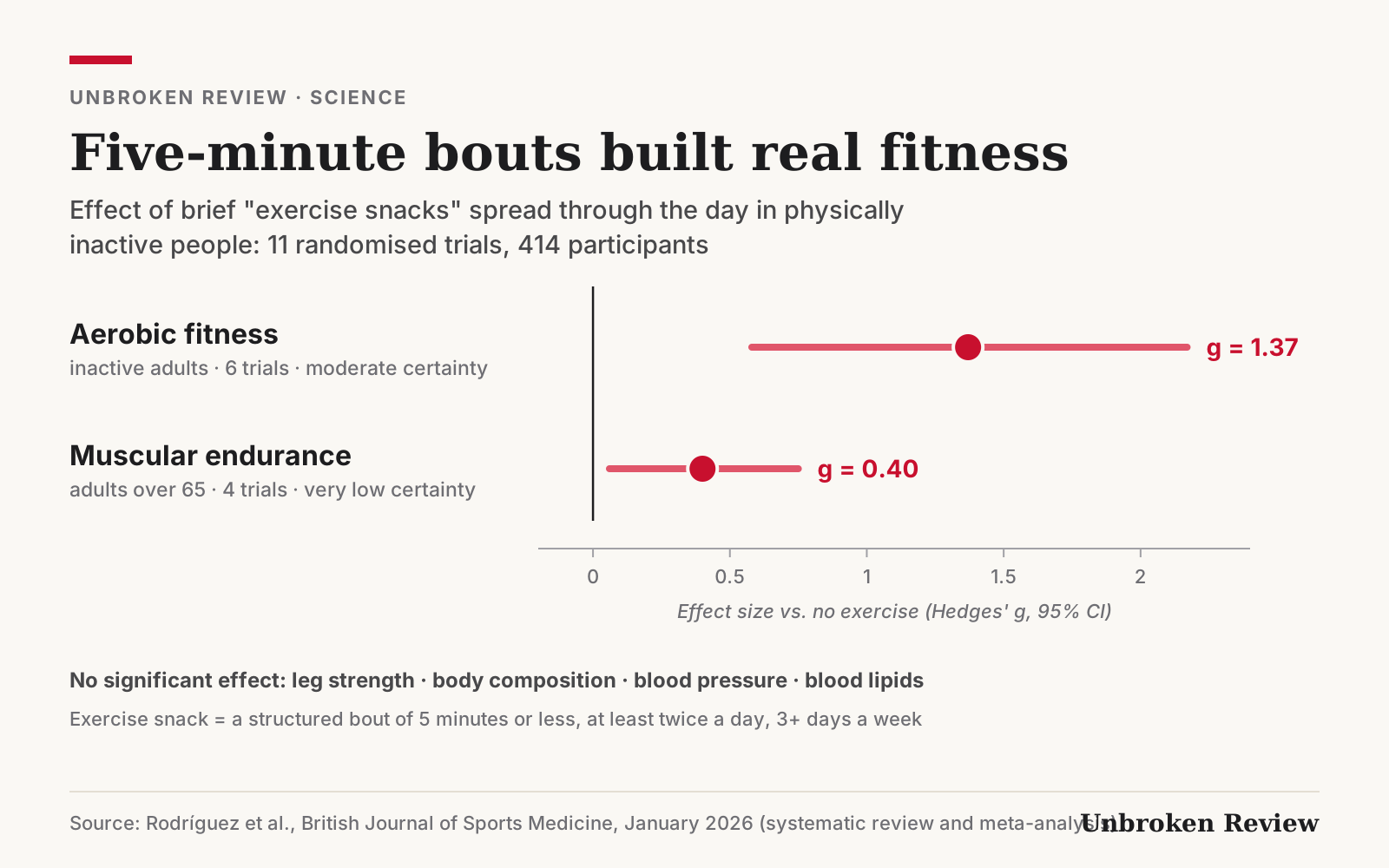
Aerobic fitness improved substantially. In inactive adults, exercise snacks raised cardiorespiratory fitness with a large pooled effect size of 1.37, rated as moderate-certainty evidence, based on six trials.
Muscular endurance improved modestly in older adults (effect size 0.40), though the certainty of that evidence was very low.
Other markers did not change. There were no significant effects on leg strength, body composition, blood pressure or blood lipids.
People stuck with it. Compliance averaged 91 per cent and adherence 83 per cent: high figures for exercise research.
What it means
For people who do not exercise, the message is encouraging and specific: brief, repeated bouts of hard effort spread through the day can build aerobic fitness, and people seem able to keep doing them. Fitness itself is one of the strongest predictors of long-term health.
For trained athletes, exercise snacks are not a substitute for a training plan: the trials were in inactive people, and the review found no change in strength or body composition. But the principle is useful for anyone whose days are fragmented. On the busiest days, a few short bouts of movement are better than nothing, and the research suggests they are not merely symbolic.