ScienceExplainer
Athletes sleep well before they race. It’s the night after that goes wrong
A review of sleep in athletes finds that disturbed sleep is widespread, especially around competition, and that the night after a race is consistently worse than the night before.

Ask an athlete about sleep before a big race and you will usually hear about nerves: the early alarm, the restless night. The research tells a slightly different story. The night before competition is often fine. It is the night after that tends to go wrong.
That is one of the findings drawn together in a review of sleep in athletes published in July in Cureus by D. Bastock of the Shrewsbury and Telford Hospital and R. Amarnani of University College Hospital, London.
What the review found
The review, a narrative summary of existing research rather than a new study, describes a consistent picture:
- Athletes often sleep less than non-athletes, even though they tend to fall asleep faster and wake less during the night.
- Poor sleep is common. A significant number of athletes report poor sleep quality, difficulty falling asleep and excessive daytime sleepiness.
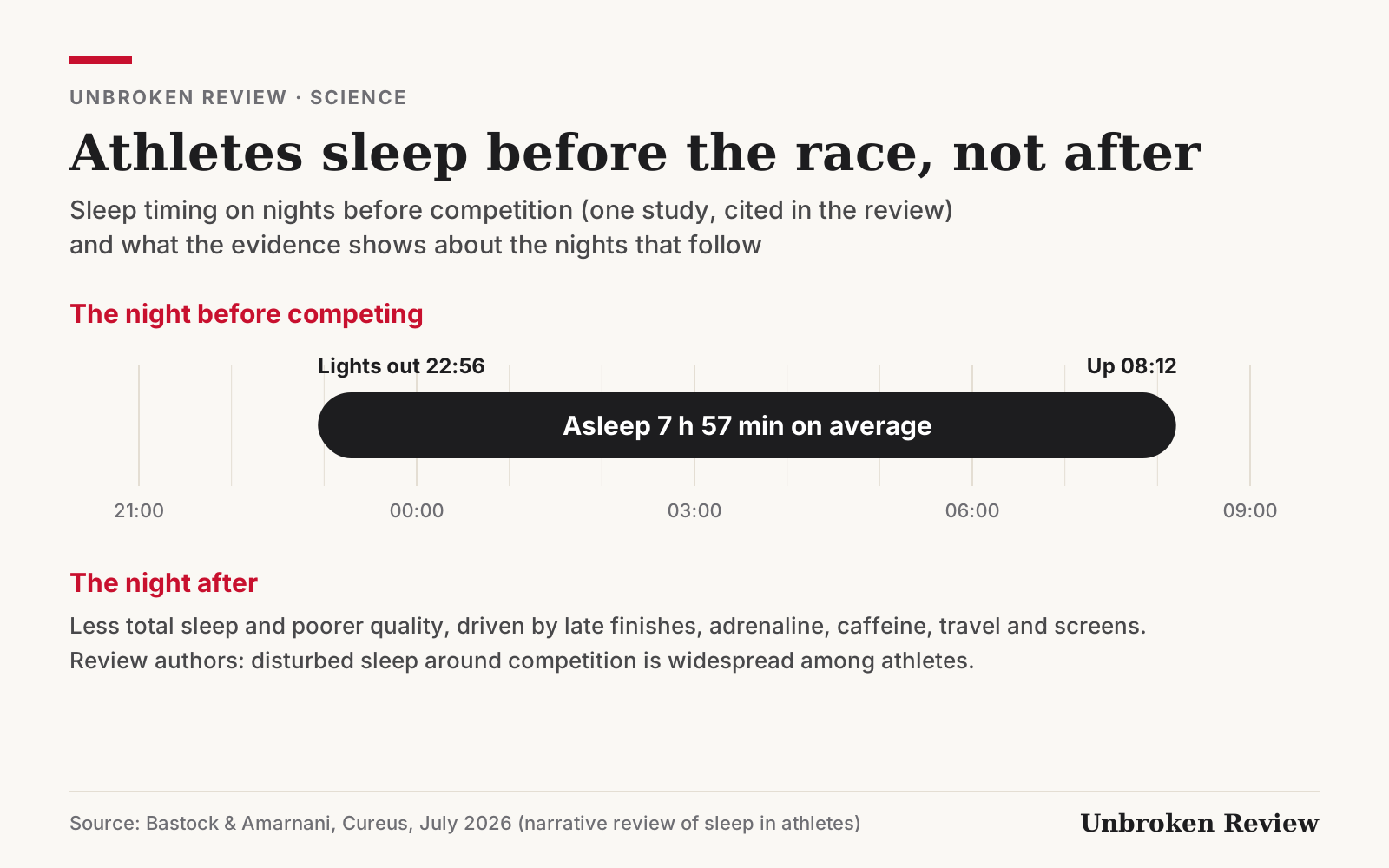
- The night before competition can be good. In one study cited in the review, athletes went to bed earlier (on average at 22:56), woke later (08:12) and slept longer (7 hours 57 minutes) on nights before competing.
- The night after is worse. Post-competition nights showed reductions in total sleep time and sleep quality compared with pre-competition nights.
The authors identify the usual suspects for that post-race disruption: late competition times, heightened physical and psychological arousal, increased caffeine intake, travel and the use of phones and other screens.
Why it matters
Sleep is when much of the body’s recovery work happens, and the review notes that inadequate sleep may affect recovery, thinking and emotional stability. There is also evidence linking short sleep to injury: a frequently cited 2014 study by Milewski and colleagues found that adolescent athletes who slept less than eight hours a night were 1.7 times more likely to be injured than those who slept more.
The irony is that the night after competition is when the body has the most to recover from, and, by this evidence, when athletes are least likely to sleep well.
What athletes can do
The review’s account of the causes points directly to the remedies. After a race:
- Plan the wind-down. Arousal does not switch off at the finish line. A deliberate routine (food, a shower, dim light, something calm) gives the nervous system a cue.
- Watch the caffeine. Caffeine taken late in a race or in the hours after it can still be active at bedtime.
- Put the phone away. Results, messages and replays keep the mind racing.
- Protect the next two nights, not just one. If the first night is poor, prioritising sleep over the following days helps recovery catch up.
None of this is complicated. The value of the research is in pointing to where the problem actually is: not the night before the race, but the night after.