Coleman Cragun and Sydney Welch win the JFK 50 Mile, America’s oldest ultramarathon
Welch ran the second-fastest women’s time in the race’s history and beat the 100k world champion Courtney Olsen. A week earlier, Phil Young broke the Tunnel Hill 100 course record in Illinois.

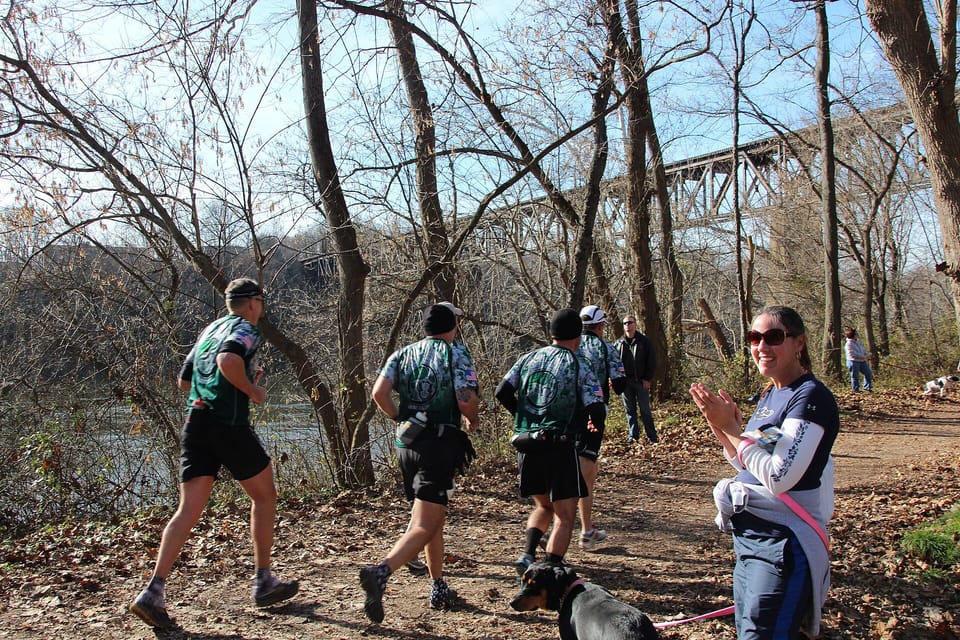
Coleman Cragun and Sydney Welch won the 64th JFK 50 Mile in Maryland on 21 November, Cragun on his debut at the race.
Cragun, 27, from Cedar City, Utah, finished the 50.2-mile point-to-point course from Boonsboro to Williamsport in 5 hours 29 minutes 13 seconds. Japan’s Hiroki Kai was second in 5:32:52, and Dylan Flewelling third in 5:34:26.
Welch, 29, from Boulder, Colorado, won the women’s race in 6:04:03 and was 16th overall. iRunFar reported that it was the second-fastest women’s time in the race’s history, behind the course record of 5:57:32 set by Rachel Drake in 2024.
The JFK 50 Mile was first held in 1963 as part of President John F. Kennedy’s push for physical fitness and has been run every year since, which makes it the oldest ultramarathon in the United States. This year 1,122 runners started, according to iRunFar.
A race of three parts
The course climbs onto the rocky Appalachian Trail for about 13 miles, then follows 26 flat miles of the C&O Canal towpath beside the Potomac River, before about eight miles of rolling country roads to the finish.
Cragun took control after the early climb. Kai led at the 2.5-mile point, where the runners join the Appalachian Trail, but Cragun was in front at the Weverton checkpoint after 15 miles in 1:48:12, World-Track and Field reported. He went through Antietam at 27.1 miles in 3:00:02 and Taylors at 38.4 miles in 4:09:40, then held on over the roads.
Kai, who has a 2:15 marathon best and two tenth places at Western States, came from fourth at Taylors to finish second. Flewelling, who dropped out late in the 2025 race, passed Matt Welch on the final roads for third. Matt Welch, who ran second for much of the day, faded to fourth.
Welch pulls away on the towpath
Élisa Morin led the women at Weverton, but Welch was in front by Antietam and built a lead of almost five minutes over Courtney Olsen by the time the course left the towpath, iRunFar reported. She ran alone from there.
Olsen, 39, is the 100k world champion and holds the American 100k record. Making her own JFK debut, she was second in 6:11:32, the seventh-fastest women’s time in the race’s history according to iRunFar. Canada’s Kaitlyn Palmateer was third in 6:34:08, just ahead of Stephanie Bruce in 6:36:21.
Both winners had finished eighth at the Black Canyon 100k earlier in 2026.
The men’s course record belongs to David Sinclair, who won the Ultra-Trail Cape Town 100k in South Africa on the same day as this year’s JFK.
Tunnel Hill: a new course record
A week earlier, on 14 November, Phil Young won the Tunnel Hill 100 in Vienna, Illinois, in 11:21:32. The race runs on the flat, limestone-surfaced Tunnel Hill State Trail, and its organisers bill it as the world’s premier speed course.
Young’s time beat the course record of 11:26:19 set by Sweden’s Elov Olsson in 2023, which the race lists as the world’s best 100-mile time off-road. It was his fourth Tunnel Hill win in six years, World-Track and Field reported, and 2 minutes 14 seconds outside Zach Bitter’s North American best, set on an indoor track, according to iRunFar. Britain’s Hugh Tibbs was second in 11:35:18.
Ireland’s Caitriona Jennings, who set a women’s 100-mile world record on the same course in 2025, won the women’s race again in 12:44:35, about seven minutes slower than a year ago.
The Tunnel Hill 50 Mile on the same day doubled as the USATF 50 Mile Road Championships. Alexander Burks won the men’s title in 4:58 and Allison Mercer the women’s in 5:54, iRunFar reported.