TechExplainer
Glucose monitors on elite athletes show readings far outside “normal”, and why that is not a warning sign
Continuous glucose monitors worn through a 44-hour cycling record, an Everesting attempt and a deep free-dive produced numbers that would worry a doctor in a clinic. Researchers say athletes’ data need different rules.

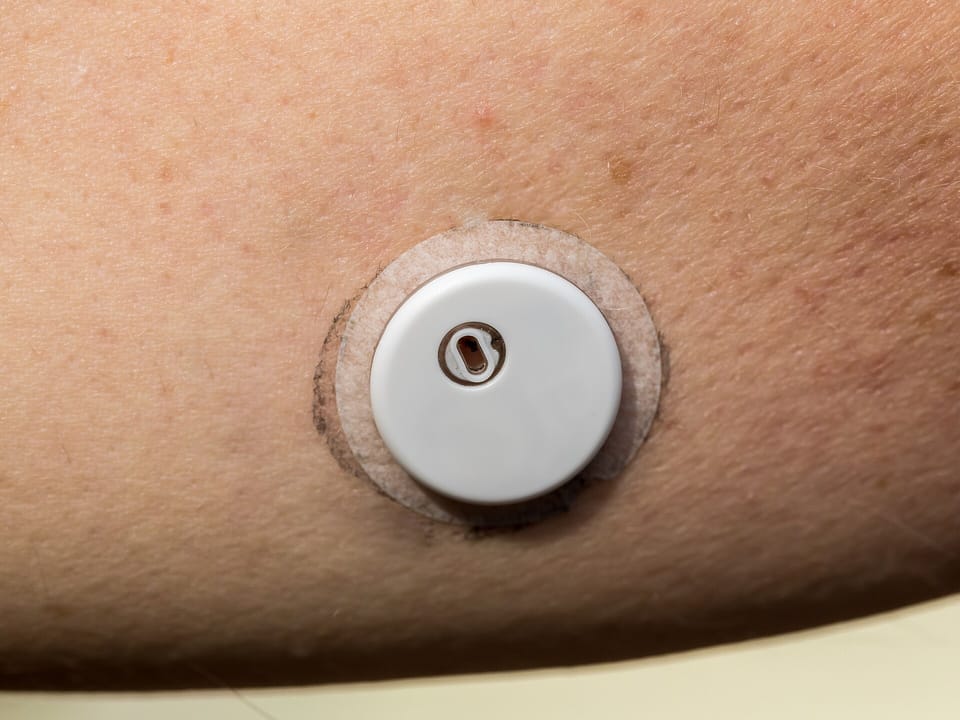
Continuous glucose monitors, small sensors stuck to the arm that read sugar levels in the fluid under the skin every few minutes, were built for people with diabetes. Over the past few years they have become a fixture on the arms of endurance athletes too, sold as a way to see fuelling in real time.
A case series published in March in the journal Sensors shows what those devices record when elite athletes without diabetes push to their limits, and why the numbers need careful reading.
Three athletes, three extremes
The researchers, from Croatia, Canada, Italy and elsewhere, describe three elite athletes who wore a monitor during record-level performances:
- A 44-hour ultra-endurance cycling relay record, the Race Across the West. While cycling, average glucose was 5.1 mmol/L (91 mg/dL), but the athlete spent about 9 per cent of the time below 3.9 mmol/L, a level clinics treat as low, and only about 36 per cent within a tight “normal” range.
- An Everesting cycling record attempt: riding up and down one climb until the total ascent equals the height of Everest. Glucose stayed high and remarkably steady, averaging 8.9 mmol/L (160 mg/dL), above the 7.8 mmol/L threshold the whole time.
- A maximal breath-hold dive in international competition. During recovery, glucose averaged 10.4 mmol/L (187 mg/dL), entirely above the threshold, while blood lactate peaked at 13.4 mmol/L.
What the researchers concluded
Large departures from the ranges used in diabetes care are common in elite performance, the authors write. Interpretation of the data “should therefore be performance- and context-specific rather than based on clinical glycemic thresholds”.
In other words, a high reading during a hard effort can reflect the body releasing stored glucose to meet demand, rather than a problem. A low reading during a very long effort may be a signal about fuelling, or a quirk of a sensor that measures the fluid under the skin rather than blood, with a delay.
The limits
This is a case series of three people, each doing something different, so it cannot say what is typical. Several authors were consultants for, or employed by, a company that sold glucose monitors to athletes during the data collection; one is now an adviser to another monitor manufacturer. The paper declares these interests.
A 2025 expert review of the evidence was more cautious still. It concluded that using these monitors in healthy elite endurance athletes is currently of limited value, because of questions about accuracy during exercise and about whether the physiological reasoning holds, and noted that genuinely low blood sugar is unlikely in athletes without diabetes who follow standard fuelling advice.