Garmin’s Enduro 4 promises 320 hours of GPS, with the sun’s help
The new ultra-endurance watch keeps its predecessor’s battery figures but doubles storage, adds stamina tracking and new battery modes. The headline number depends on solar charging and a reduced-accuracy mode.

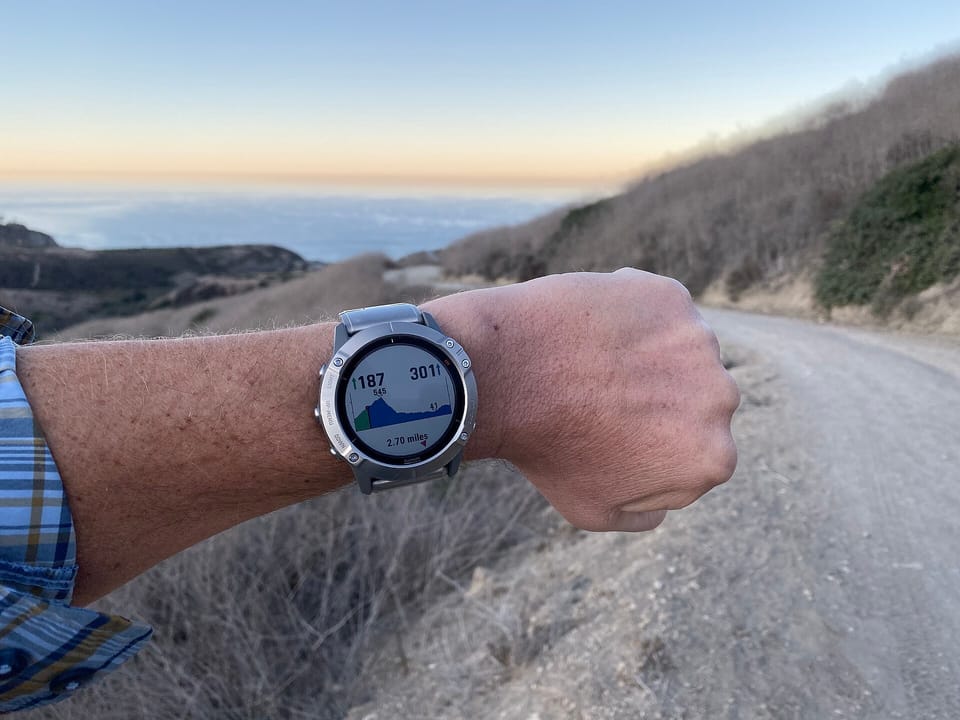
Garmin has launched the Enduro 4, the latest version of its watch for ultra-runners and multi-day adventurers. It was released on 6 October, priced at £799.99 in the UK and $899.99 in the US, and has been available to order since 9 October.
The battery numbers, explained
Battery life is the reason the Enduro exists, and the headline figure is up to 320 hours of GPS tracking. That number needs unpacking. According to Garmin’s published specifications, compiled by the5krunner:
| Mode | Without solar | With solar |
|---|---|---|
| Smartwatch | 36 days | 90 days |
| GPS, normal | 80 hours | 144 hours |
| GPS, extended battery | 120 hours | 320 hours |
| GPS, maximum accuracy | 60 hours | 90 hours |
| GPS, max battery | 210 hours | unlimited |
The 320-hour figure applies only in a power-saving extended-battery mode, and only with enough sunlight on the solar lens. In normal GPS mode, without sun, the figure is 80 hours, still enough for the slowest finishers at most 100-mile races.
The battery figures are essentially unchanged from the Enduro 3, according to the5krunner. So are the 51 mm case, the 1.4-inch transflective display and the Power Sapphire solar lens.
What is actually new
- Storage doubles to 64 GB, for more offline maps, and Garmin says the watch has 50 per cent more memory, with faster map panning.
- Named battery modes, Max Accuracy and Max Battery, make the trade between precision and runtime more explicit, according to launch coverage.
- Stamina tracking adds zones and a curve that estimate how much energy remains for a long effort.
- Garmin Epic groups multi-day activities, such as a stage race or a long expedition, into a single record.
- Grade-adjusted pace workouts account for hills when setting pace targets.
Should you upgrade?
For owners of the Enduro 3, the changes are mostly storage, software and mapping speed rather than battery life. For runners moving from a smaller watch, the trade-off is the same as it has always been: the Enduro uses a memory-in-pixel display rather than a brighter AMOLED screen, in exchange for days of battery life.