TechExplainer
Can an AI chatbot write your training plan? What the evidence says so far
AI coaching apps are multiplying. The clearest test of a chatbot-written running plan found that coaching experts rated it poorly, until it was given much more information about the runner.

Ask a chatbot for a marathon plan and it will produce one in seconds. A new generation of apps goes further, reading your watch data each morning and rewriting the day’s session. Apple’s watches now offer spoken “Workout Buddy” insights generated by its AI. The question every runner should ask is simple: is the plan any good?
The test
The most direct published answer comes from a study in the Journal of Sports Science and Medicine by researchers in Germany, the Netherlands and the UK, led by Peter Düking.
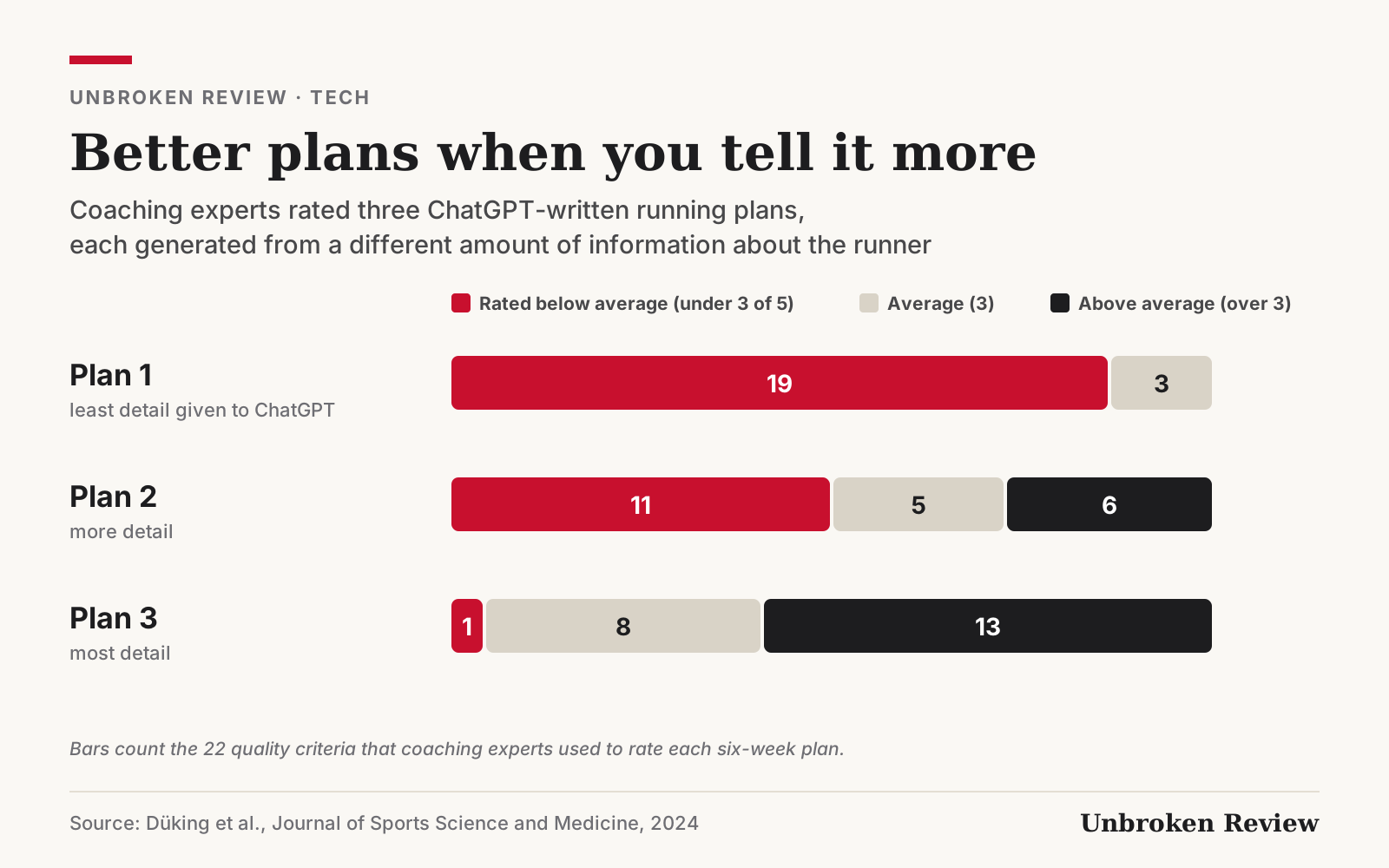
They asked ChatGPT for three six-week running plans, each time giving it more detailed information about the runner. Coaching experts then rated each plan on 22 quality criteria drawn from the training literature, on a scale of 1 to 5.
The result
The plan generated from the least information was rated below average on 19 of the 22 criteria and above average on none. The plan generated from the most information was rated above average on 13 criteria and below average on just one. The middle plan sat in between.
The authors concluded that ChatGPT’s plans were “ranked sub-optimally by coaching experts, although the quality increases when more input information are provided”, and advised runners not to follow them “without an expert coach’s feedback”.
What has changed since
That study used a general-purpose chatbot, and AI tools have developed quickly. Several training apps launched in 2026 now combine language models with data from watches and recovery devices to adjust plans daily. Most of the claims made for them come from the companies themselves.
Independent trials are starting. At the University of Miami, a randomised trial of an AI coaching system for indoor cycling, designed to adapt to riders’ confidence as well as their fitness, began in May 2026. Its results are not expected until 2028.
How to use AI sensibly now
- Give it context. The study’s clearest lesson: more information produced much better plans. Include your history, injuries, weekly time available and the rest of your life.
- Check the basics. Does the plan build gradually, include easy days and recovery weeks, and match your actual schedule?
- Keep a human in the loop. An experienced coach, or your own honest judgement, should review what the machine suggests, especially when it tells you to train through warning signs.