
RunningAnalysis
The Commonwealth Games dropped the marathon for the first time since 1930. What that says about endurance sport
Glasgow 2026 brought back the mile and crowned Josh Kerr in front of a home crowd. It also became the first Games without a marathon, the one athletics event anyone could watch for free.

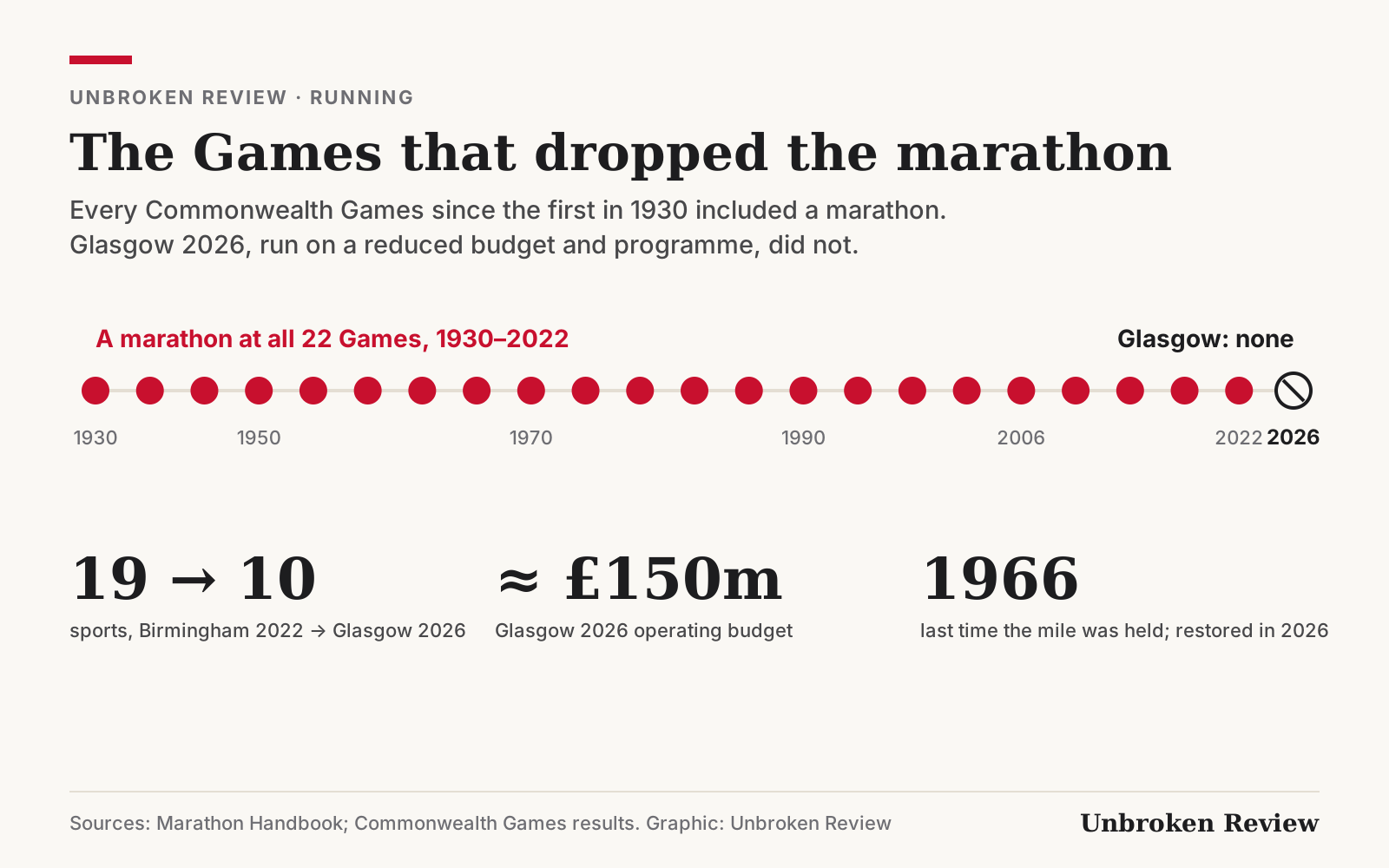
When Scotland’s Duncan Wright won the marathon at the first British Empire Games in Hamilton, Ontario, in 1930, he began a tradition that ran through every edition that followed. For 22 consecutive Games, the marathon was part of the programme.
At Glasgow 2026, it was not.
The Games, held in the city from late July, were the first in their history without a marathon. The reason, according to reporting by Marathon Handbook, was money. Glasgow staged the event on a budget of around £150 million after the Australian state of Victoria withdrew as host in 2023, citing a projected cost of A$6.9 billion, a figure a later state audit found to be overstated. The sports programme was cut from 19 sports at Birmingham 2022 to 10.
In athletics, the cuts fell on the events held outside the stadium. A marathon requires closed roads, policing and medical cover along 26.2 miles of course; all of the track and field events stayed inside Scotstoun Stadium.
The event anyone could watch
The decision carries a particular irony. At Birmingham 2022, the marathon, won by Uganda’s Victor Kiplangat in 2:10:55 and Australia’s Jessica Stenson in 2:27:31, was one of the few events spectators could watch without a ticket.
There was an attempt to save it. In April 2025, the Glasgow MSP Paul Sweeney lodged a motion at Holyrood proposing that the marathon be reinstated as a mass-participation event: national teams would start first, and paying entrants would follow on the same course, their fees covering the costs. Seven other MSPs from three parties signed it. The motion expired without a vote, and no published figures showed whether the plan would have paid for itself.
The mile came back
Glasgow did restore one endurance event. The mile, last held at the Games in 1966, returned as the “Commonwealth Mile” for men and women, a change pushed by World Athletics president Sebastian Coe, who argued that the distance remains an everyday measurement across the Commonwealth.
It produced the moment of the Games for the host nation. Josh Kerr, who had broken the mile world record in London that summer, won a slow, tactical race by pulling away from Australia’s Cameron Myers and Scotland’s Jake Wightman over the final 200 metres.
What it says
Major championships are under financial pressure everywhere, and the events that cost the most to stage outside a stadium are the obvious candidates for cuts. Road and open-water events need host cities to close streets and coastlines; they cannot be sold by the seat.
But they also offer something a stadium cannot: free access to world-class sport for anyone who turns up, and a direct connection to the mass-participation running culture that now fills marathon start lines from London to Sydney. The London Marathon received more than 1.1 million ballot applications this year.
The next Games, in Ahmedabad, India, in 2030 (a century after Hamilton), will feature between 15 and 17 sports. Organisers have not said whether the marathon will return. For a sport whose popularity has never been greater, its absence from one of its oldest championships is worth noticing.


