
MindExplainer
The mental-health benefit of walking levels off, and the plateau arrives earlier than you might think
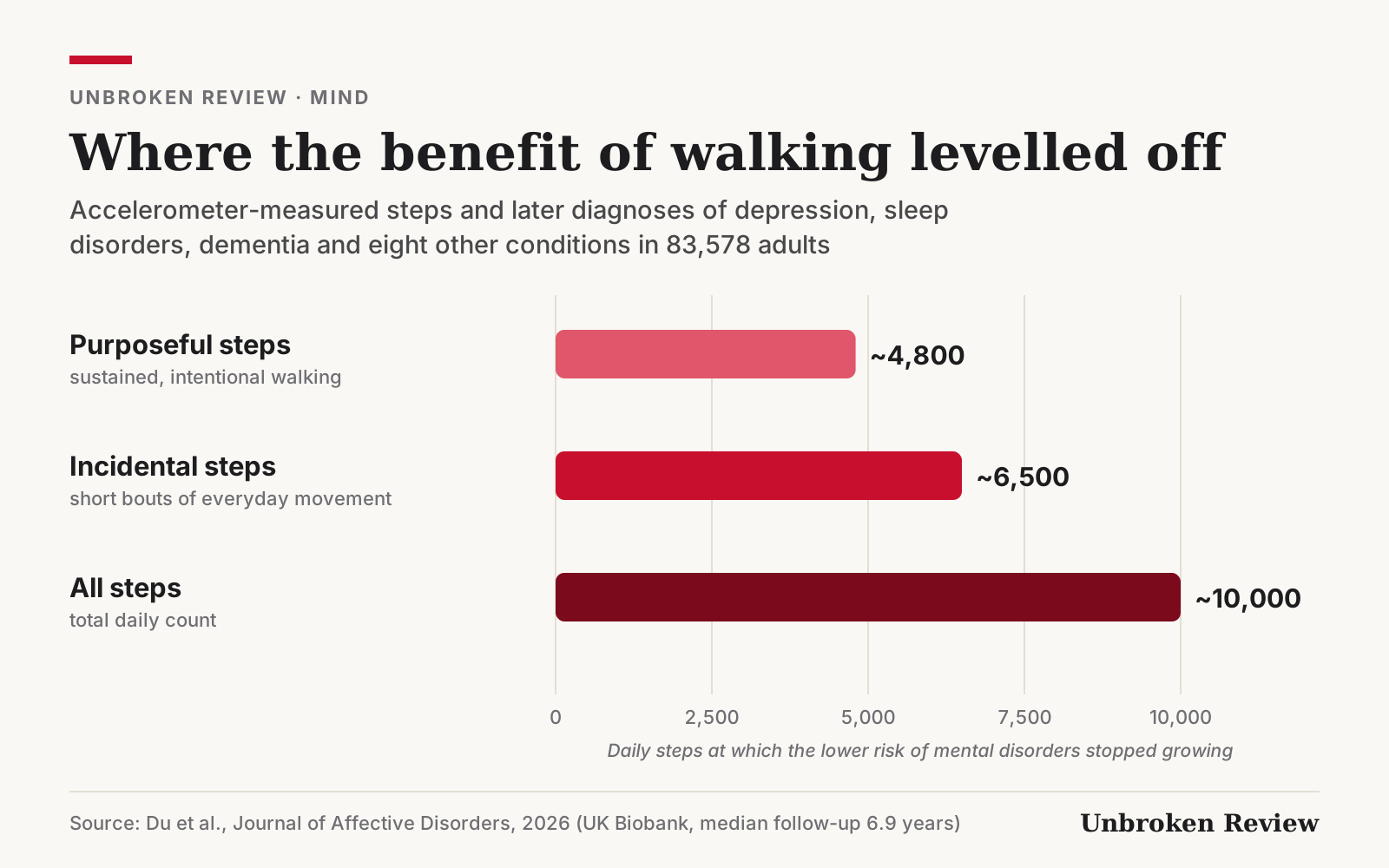
In 83,578 adults whose steps were measured by accelerometer, the link between walking and lower risk of mental disorders levelled off at about 10,000 steps a day in total, and at under 5,000 for purposeful walking.

Step counts are the most widely tracked health number in the world. Most of the research behind them has focused on the heart and on how long people live. A study published in April in the Journal of Affective Disorders looks instead at the mind.
What the researchers did
A team at Guangzhou Medical University in China used data from 83,578 middle-aged and older adults in the UK Biobank who wore an accelerometer that counted their steps. The researchers separated steps into two kinds: purposeful steps, taken in sustained walking, and incidental steps, taken in short bouts during everyday life.
Participants were followed for a median of almost seven years, and the researchers recorded new diagnoses of mental disorders from hospital records and death registries, including depressive disorders, sleep disorders, dementia and eight other conditions.
What they found
More steps were associated with a lower risk of mental disorders, in a dose-response pattern: the more people walked, the lower their risk, up to a point. The benefit levelled off at around:
- 4,800 purposeful steps a day
- 6,500 incidental steps a day
- 10,000 steps a day in total
Beyond those levels, additional steps were not associated with further reductions in risk. Faster, higher-intensity walking was linked to additional benefit once people were taking enough steps.
The researchers also explored possible mechanisms. Their analyses suggested that part of the association ran through blood markers related to fat metabolism and inflammation, and part through brain structure measured on MRI scans.
What it means
Two things stand out.
First, the purposeful-walking plateau is modest. Around 4,800 steps, roughly 40 to 45 minutes of steady walking for many people, was the point beyond which more purposeful steps were not associated with further benefit. That is an achievable daily target, not an athletic one.
Second, the mental-health picture appears to be about regular movement rather than volume for its own sake. For people who already train, the study is a reminder that the walk to the shops, the walk with the dog and the easy movement between sessions are part of the picture too, not just the training plan.


