
MindExplainer
Choking under pressure is not a character flaw. A review of 21 studies shows it can be trained against
Quiet-eye training, pre-performance routines, mindfulness and self-talk all reduced the drop in skilled performance under pressure, most reliably in sports where the athlete controls the timing.

Every athlete has seen it happen, and many have felt it: the putt missed from three feet, the penalty skied over the bar, the transition that goes to pieces when it matters most. Psychologists call it choking under pressure: a drop in performance, below what an athlete is capable of, caused by the pressure of the moment.
It is often treated as a matter of temperament: some people are “clutch”, others are not. A meta-analysis published this year in Psychology of Sport and Exercise suggests a more useful view. Choking can be trained against.
What the researchers did
Researchers at Henan University in China and Universiti Putra Malaysia, with colleagues elsewhere, pooled 21 studies that tested interventions designed to protect sport-specific performance under pressure. The most common were:
- Quiet-eye training: learning to hold a steady gaze on the target for longer before acting.
- Pre-performance routines: a consistent sequence of actions and thoughts before each attempt.
- Mindfulness: training attention on the present moment rather than on outcomes or consequences.
- Left-hand contraction: squeezing a ball in the left hand before performing.
- Self-talk: planned, instructional or motivational phrases.
- Rational emotive behaviour therapy: challenging unhelpful beliefs about failure and evaluation.
What they found
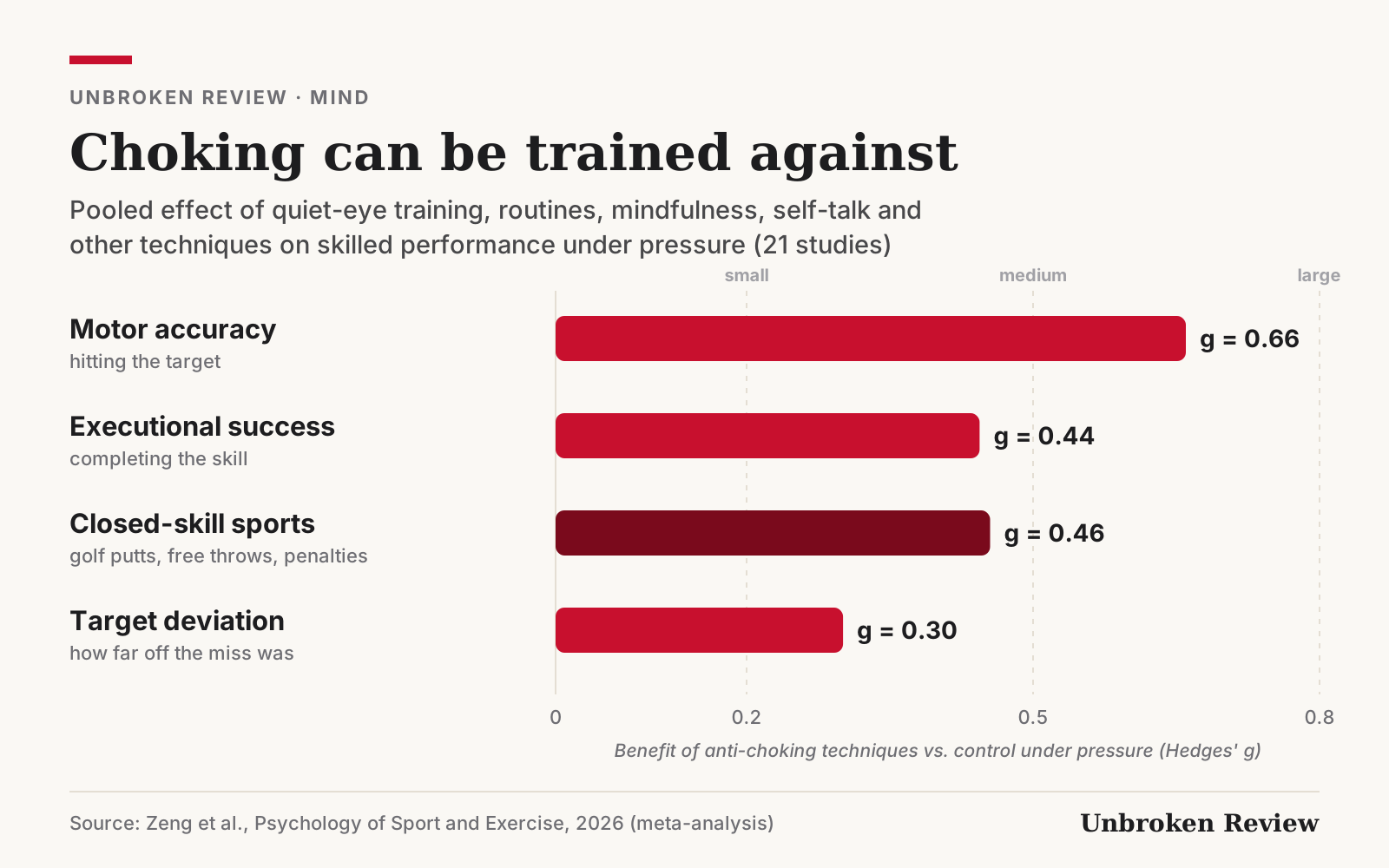
The interventions reduced the decline in performance under pressure across every outcome measured:
- Motor accuracy: hitting the target: effect size 0.66, a moderate-to-large benefit.
- Executional success: completing the skill: 0.44.
- Target deviation: how far off a miss was: 0.30.
The effects were larger and more consistent in closed-skill sports, where the athlete controls the timing: golf putts, free throws, penalty kicks (0.46). In open-skill situations, where the athlete must react to a changing environment, the benefits were smaller and less robust once the researchers adjusted for publication bias.
What it means for endurance athletes
Endurance sport may not look like a world of closed skills, but it is full of them: the swim start, the mount and dismount in transition, the bottle exchange, the corner on a technical descent, the decision to respond to an attack. They are also exactly the moments in which pressure tends to show.
Two techniques in the review translate directly. A pre-performance routine (the same breath, the same cue words, the same physical sequence before each start or transition) gives the mind something to do other than worry. And mindfulness, practised in training, builds the habit of returning attention to the task rather than to the stakes.
The broader lesson is that composure is a skill. Like any skill, it improves with practice, and it is far better practised in training than discovered on race day.


