The 2027 Tour de France will have 71 km of time trials, the most since 2012, and ends its mountains on the Col du Portet
ASO’s route runs 3,479 km from Edinburgh to Paris with two individual time trials, three summit finishes and a Pyrenean queen stage over the Tourmalet. The Alps get just two days, and none of their climbs passes 2,000 metres.

The 2027 Tour de France will include 71 km of individual time trials, the most since 2012, organiser ASO confirmed when it presented the route in Paris on 22 October.
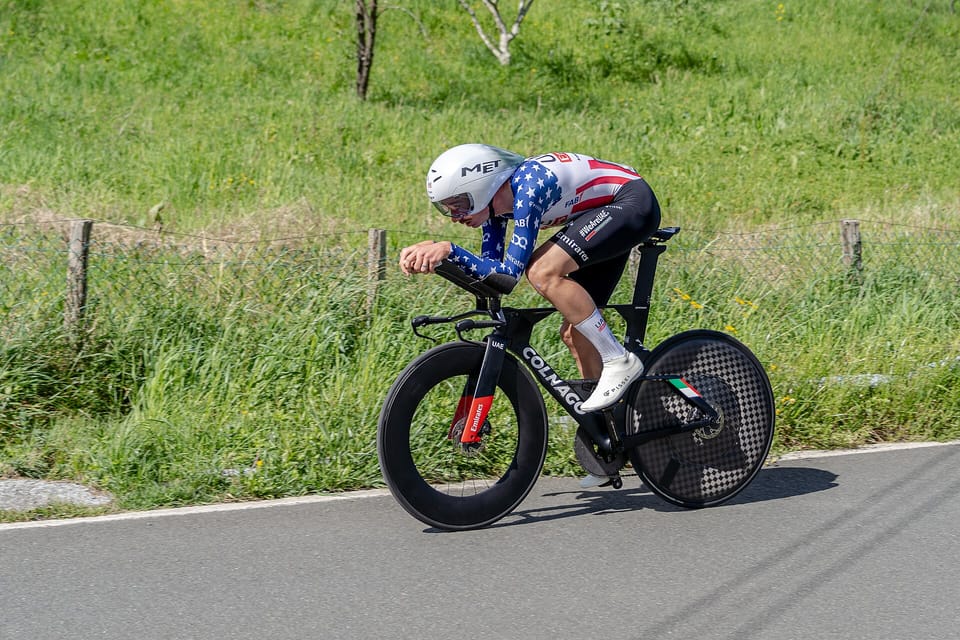
The 114th Tour covers 3,479 km over 21 stages, from Edinburgh on Friday 2 July to the Champs-Élysées on Sunday 25 July. According to the official route, there are seven flat stages, six hilly stages, six mountain stages with three summit finishes, and two time trials: 38 km from Blois to Chambord on stage 7, and 33 km around Toulouse on stage 16.
The last Tour with that much racing against the clock was won by Bradley Wiggins, a time-trial specialist. That has made the route the main talking point for Remco Evenepoel, second to Tadej Pogačar in July.
Britain, then Brittany and the Loire
The three British stages were announced in January: Edinburgh to Carlisle (185 km), Keswick to Liverpool (223 km) and Welshpool to Cardiff (223 km). ASO describes it as the northernmost Grand Départ in the race’s history.
The race then crosses the Channel. The first rest day, on Monday 5 July, is in Cherbourg-en-Cotentin, which hosts a loop stage the next day. Stages through Brittany and the Loire valley lead to the first time trial on Friday 9 July, which Domestique describes as undulating.
Evenepoel had asked for a time trial at Les Herbiers in the Vendée after winning the Chrono des Nations there on 18 October. Les Herbiers is not among the stage towns.
Two days in the Alps
The first summit finish, on the Grand Colombier, comes on stage 9 on 11 July. After the second rest day, stage 10 runs from Annecy to Sallanches over the Côte de Domancy, which is climbed twice. Sallanches hosts the world championship road races seven weeks later: the men’s on 29 August and the women’s on 5 September, according to the UCI.
Stage 11, on 14 July, finishes at Les Saisies, one of nine places new to the Tour, after the Colombière, the Croix Fry, the Forclaz de Queige, the Col du Pré and the Montée de Bisanne. The race then leaves the Alps.
“This is probably one of the first times we haven’t climbed above 2000m in the Alps, but the Col du Pré-Montée de Bisanne combination is worth its weight in gold,” Prudhomme said, according to Domestique.
A late Pyrenean finale
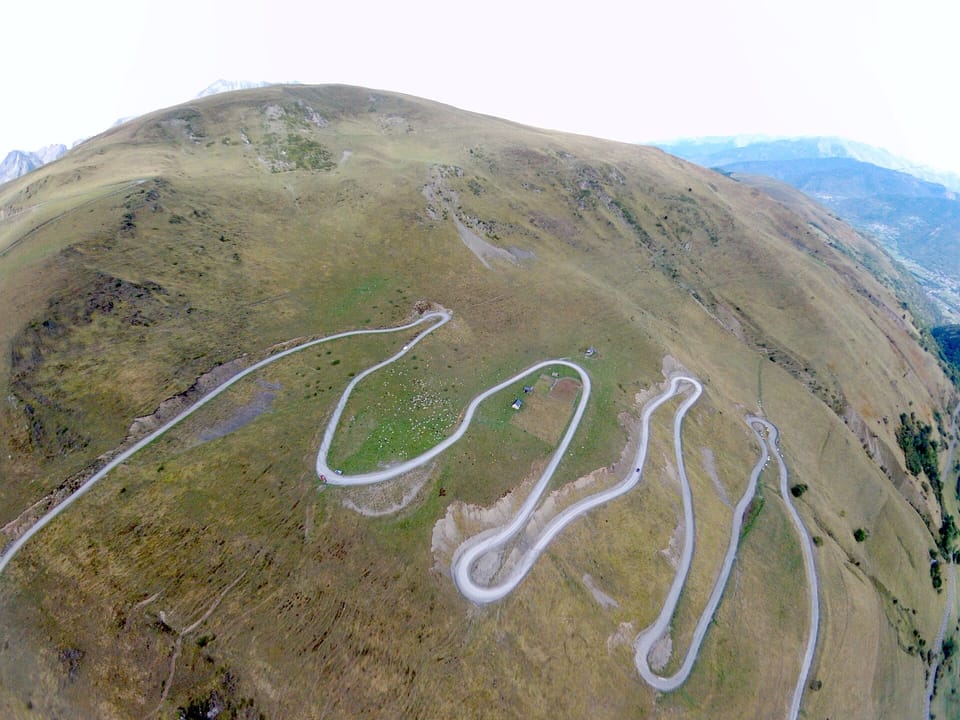
After the final rest day and the second time trial in Toulouse, stage 18, from Pau on 22 July, is the hardest day on paper: 174 km over the Soulor, the Tourmalet and the Hourquette d’Ancizan to a summit finish on the Col du Portet. At 2,215 metres, the Portet is the highest point of the race. Domestique gives the stage 5,400 metres of climbing. “In the Pyrenees, we’ll be combining the Tourmalet and the Portet for the first time,” Prudhomme said.
The race ends on 25 July with three climbs of the Butte Montmartre before the finish on the Champs-Élysées, the third year in a row the climb has been used, Cyclingnews noted.
Our 18 October preview listed the reported stage towns. Cherbourg, the Blois time trial and a Pyrenean stage over the Tourmalet and the Hourquette d’Ancizan to the Portet were all confirmed. The Col du Granon and Piau-Engaly do not appear.
“Not for a specific rider”
Asked whether the time trials were aimed at Pogačar, who will be chasing a record sixth title, Prudhomme said, according to Domestique: “We can design courses for a certain type of rider, but not for a specific rider. The difficulty is that, whatever the terrain, Tadej Pogačar is very strong.”
Prudhomme also wondered aloud whether Pogačar would be “the same rider” after his crash at the Vuelta a España in August. Pogačar, who fractured his collarbone and spine in that crash, told Slovenian broadcaster RTVSlo on 19 October that he had started training again. His goals for 2027 were “the World Championships combined with the Tour and the Vuelta,” he said, as reported by Cyclingnews.
He also singled out Paul Seixas, who was fourth on his Tour debut at 19 and won Il Lombardia on 10 October. “He’s no longer a champion of tomorrow but a champion of today,” he said, according to Domestique.
Evenepoel’s team manager at Red Bull-Bora-hansgrohe, Ralph Denk, told Het Laatste Nieuws at the presentation that he was “not a fan” of Evenepoel riding the Giro d’Italia before the Tour, Cyclingnews reported. “It seems better to me to focus on one of the two,” Denk said.