Vincent Luis, retired at 37, plans to help Georgia Taylor-Brown towards LA28 and start a youth team
Two weeks after winning in Kona, the Frenchman told L’Équipe that he had been chasing a good ending rather than another win, and described the hot baths, 7.30pm bedtimes and altitude camp behind it.
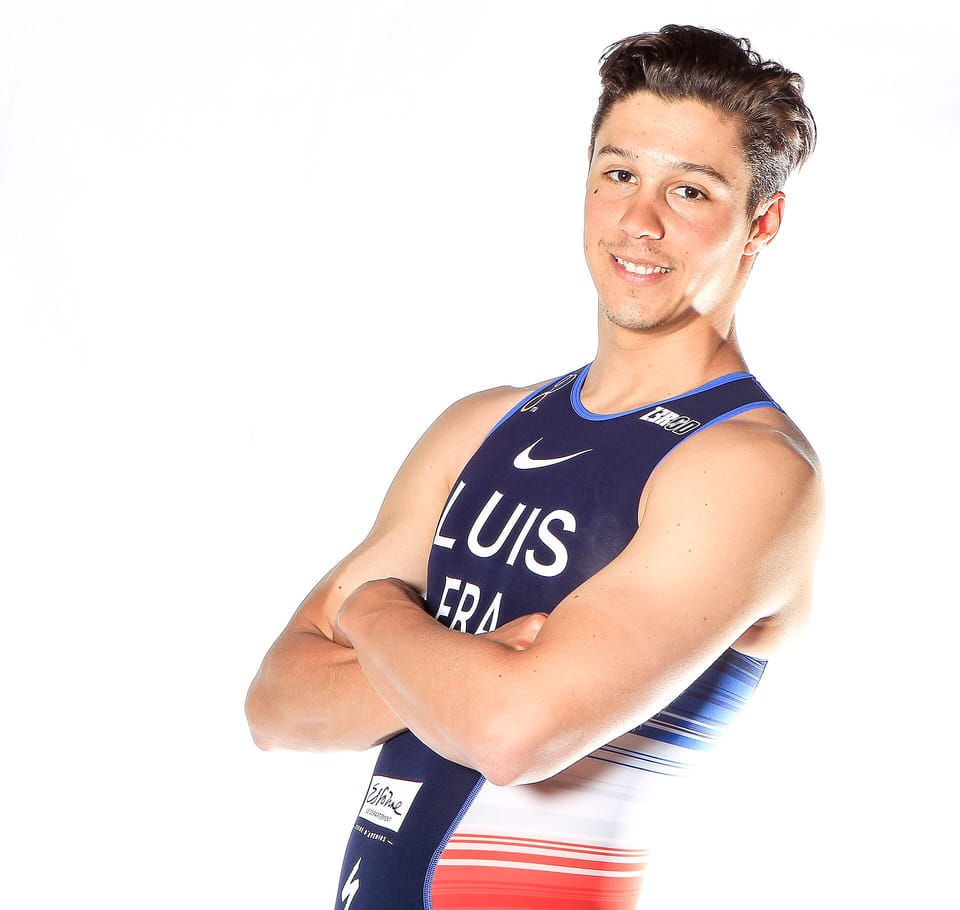
Vincent Luis has settled into retirement after winning the Ironman World Championship in Kona on 10 October, and says he will spend the next two years helping his partner, Georgia Taylor-Brown, prepare for the 2028 Olympic Games in Los Angeles.
In an interview with L’Équipe published on 23 October, the 37-year-old Frenchman described retiring at his age as “a luxury” (all quotations are our translation from French). “Most people retire when they are old. Now I can do quite a lot of things,” he said. He also wants to set up a team of young athletes and help them reach the top level.
The interview is the clearest sign yet that Kona was his final race. At the finish, he had told Triathlete that he could not commit to another build like it. “It was 100% worth it. But I won’t do it again,” he said then. L’Équipe now describes him as a “néo-retraité”, a new retiree.
Chasing an ending, not a win
Luis, a two-time world champion over the Olympic distance, said he had wondered whether he should have stopped after winning a World Triathlon Championship Series race in Bermuda in 2022. He said he could not stop after 2024, when he was not selected for France’s Olympic team in Paris.
“In fact, I was no longer chasing a victory but a good ending,” he said. “If I had won the 70.3 world championships last year, I might have stopped there.” By January, he had decided Kona would be his last race “whatever happened”, because the good ending was slipping further away. “I didn’t want to finish by coming tenth in a T100.”
How he prepared
He described a season built around a single race, something he said he had rarely done when the World Triathlon calendar was more compact. Heat preparation started early in the year with hot baths and sauna sessions, then two sessions a week in a heat room from March. Three months before Kona he moved to an altitude camp at Font-Romeu in the Pyrenees.
There he trained about 30 hours a week at 1,800 metres, he said, including what his group called “Fat Max” days of six hours on the bike and two hours of running. He said he went to bed at 7.30pm, used no phone for an hour before sleep or after waking, and lost 4 kg in six months to race at 65 kg, the lightest he had been.
“I had always been at 95% all year, but I had rarely been at 105% for one race,” he said. In the past, doing extra in training had led to injuries. “This time, everything lined up.”
What comes next
Luis said he wants to spend more time in Paris, where he co-owns a café with friends in the 18th arrondissement, and that careful investment since his junior days means he does not need to rush into work. Taylor-Brown, a British triathlete, won Olympic silver in 2021.
He has not stopped exercising altogether. He said he threw away his swimming kit and his scales after the race, and swam in running shorts the following Monday out of habit. He expects to keep training for the routine. “I will miss training more than competition,” he said. “I’m going to extend my life as a high-level athlete in adventure mode.”
He did not say what form those adventures would take. Luis won Kona at his first attempt, in 7 hours 47 minutes 27 seconds, ahead of Norway’s Gustav Iden and Matthew Marquardt of the United States.