Suunto launches the Race 3S at $599, with a paid AI coach that has no price yet
The small trail watch costs far more than the Race S it replaces. Early independent reviews praise its new heart rate sensor but question the price, and Suunto has not said what its AI Coach will cost after a three-month trial.

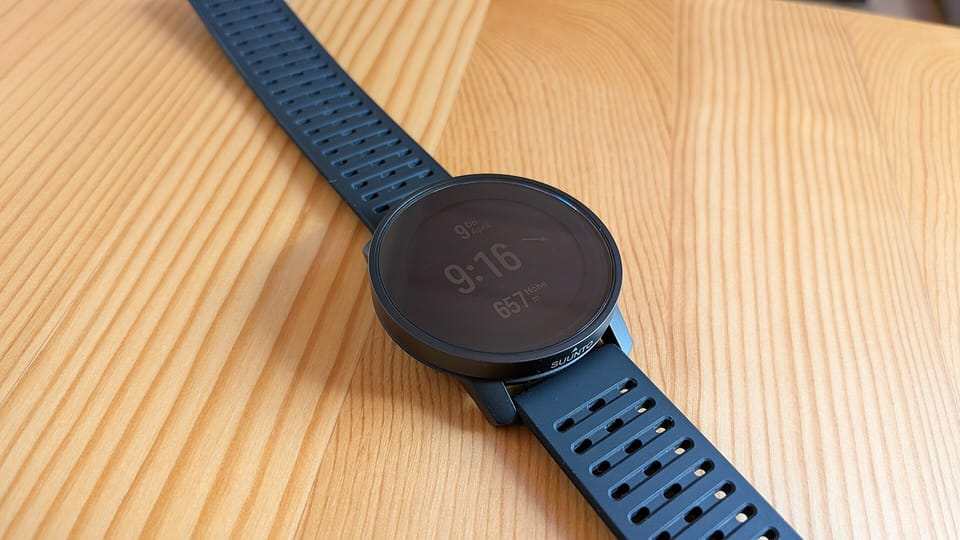
Suunto launched the Race 3S on 15 October, a compact sports watch aimed at trail runners that costs $599 in the United States, £435 in the UK and €499 in Europe. It arrives alongside Suunto AI Coach, a chat-based coaching service in the Suunto app that will be paid for once a free trial ends. Suunto has not said what it will cost.
The Race 3S replaces the Race S, which launched in June 2024 at $349 for the standard version, according to DC Rainmaker. Tom’s Guide put the launch price of the titanium Race S at $449 and £395. DC Rainmaker’s Ray Maker called the new US price “more than a 70% USD price increase” on the standard model.
According to the5krunner, it went on sale in the UK and Europe on 15 October; US and Canadian sales start on 29 October.
What has changed
The main hardware changes, according to Suunto’s specifications as reported by DC Rainmaker and the5krunner:
- a 1.32-inch AMOLED screen that reaches 2,000 nits, under sapphire glass, with a titanium bezel;
- a new optical heart rate sensor, which Suunto says has six LEDs and four photodetectors;
- up to 38 hours of GPS recording in dual-frequency mode and 45 hours in single-frequency mode, up from 30 hours on the Race S;
- up to 12 days as a smartwatch, up from nine;
- 64GB of storage, double the Race S, used for maps and offline music copied to the watch.
The case is 46 mm across and the watch weighs 56 g with its strap. Offline maps remain free. A Race Planner feature, which builds a pacing plan from a route, the forecast and a goal time, is promised for later in the year and will not require AI Coach, DC Rainmaker reported.
The AI coach
Suunto AI Coach works inside the Suunto app, not on the watch. According to the5krunner, it answers training questions using the athlete’s own Suunto data, with charts, tables and maps, and can build workouts, training plans and routes that sync to the watch. Daniel Das Bhowmik, Suunto’s vice-president of product, described it as “turning questions and personal data into clear, actionable answers”, the5krunner reported.
Buyers who pair and activate a Race 3S in the Suunto app by 31 December 2026 get three months free. After that it is a paid service, at a price Suunto has not published. Suunto told DC Rainmaker that it wants to see what people actually use and gather feedback before deciding.
Maker called it his “one (kinda big) quibble”. Suunto has not said which other watches will support AI Coach, or which AI model it uses.
Unbroken Review has not tested AI Coach, and independent evidence on AI coaching is thin. In a 2024 study in the Journal of Sports Science and Medicine, coaching experts rated six-week running plans written by ChatGPT as sub-optimal, although quality improved as the chatbot was given more information about the runner. That study tested a general chatbot, not a product like Suunto’s.
What the first reviews found
Two reviewers who wore the watch before launch singled out the heart rate sensor. Maker, who tested it against chest straps, wrote: “It’s really darn good in my testing.” Nick Harris-Fry of Tom’s Guide found it “much better” than the Race S sensor, though it occasionally spiked and was slow to lock on at the start of cold runs.
GPS tracks were in line with Garmin, COROS and Apple watches worn alongside in both reviews, although among tall city buildings Maker found every brand mediocre.
Battery life was below the headline figures in daily use. With the screen always on and 60 to 90 minutes of GPS a day, Maker got “about 5ish days”, short of Suunto’s seven-day rating for an hour a day. Harris-Fry got five to six days with daily runs and a bright, always-on screen.
Both came back to the price. Tom’s Guide said “the price has surged” and that there are “better value options” from Suunto and others. Maker concluded: “After a string of wins, I think Suunto missed the boat on this one.” He said a price of $399, or at most $449, would change his view, pointing to the $449 COROS Pace 4 Pro.
The Race 3S moves Suunto into a higher price band, and AI Coach is, in Maker’s words, a subscription “where new Suunto App features are being funneled into”. What it will cost, and whether it is worth paying for, are still open questions.