
Oura agrees to buy Counsel Health for $625m, adding AI chat and doctors to its ring app
The smart-ring maker is paying cash for the US telehealth start-up whose service it already sells for $159 a year, six weeks after postponing its stock market listing.

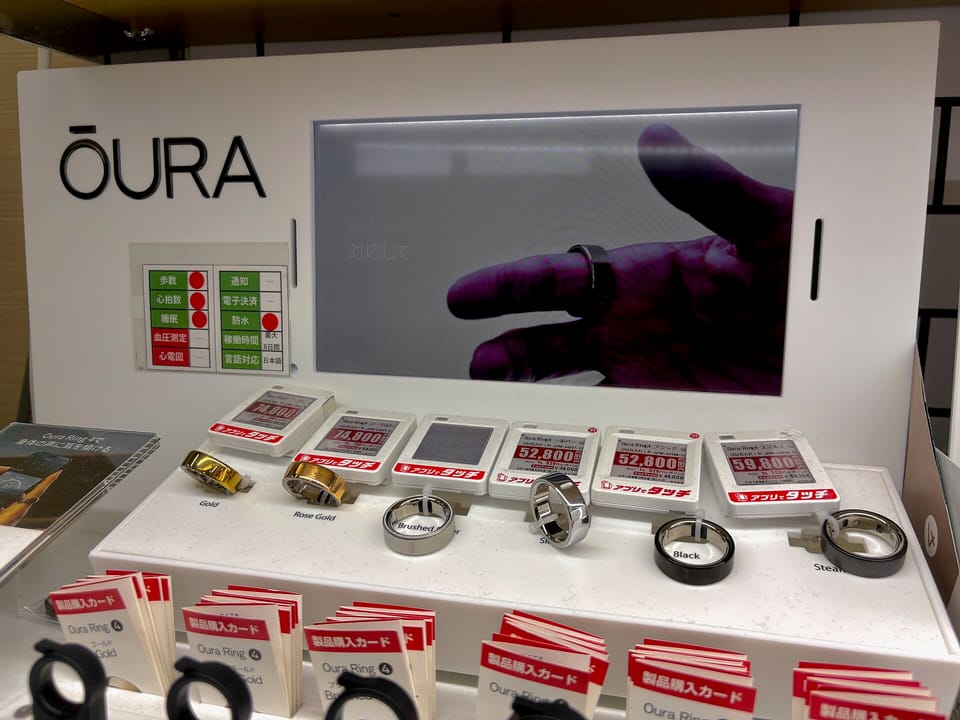
Oura, the Finnish maker of the smart ring worn by many runners and cyclists to track sleep and recovery, has agreed to buy Counsel Health, a US company that combines an AI medical chatbot with on-call doctors. The deal, announced on 10 November, is worth $625 million in cash, subject to purchase price adjustments.
The companies said they expect it to close before the end of 2026, subject to customary conditions. It comes six weeks after Oura postponed its planned listing on the Nasdaq exchange.
What Counsel does
Counsel describes itself as an “AI-native” primary care company. A user starts by messaging its AI, which draws on their medical records, previous conversations, clinical guidelines and, in Oura’s case, data from the ring. At any point the user can bring in one of Counsel’s doctors, who can diagnose, prescribe and refer, according to the announcement.
The two companies have worked together since May 2026, and Counsel’s service has been available to US members through Oura Labs, the app’s section for experimental features, since June.
It is not free. Oura’s support pages list a Counsel plan at $159 a year after a 30-day free trial, giving “unlimited access to medical AI and licensed doctors in the Oura App”. Oura says $76.50 of that fee goes to Counsel Medical Group for physician visits and the rest covers Oura’s costs of running the platform. An Oura membership is also required.
For now it is a US-only service. Oura says it is available in 43 states. It is not offered in Arkansas, Kansas, Mississippi, New Mexico, Rhode Island, Washington, West Virginia or the District of Columbia, which Oura says require a video call to establish a doctor-patient relationship, something Counsel does not yet support.
Why Oura wants it
“Oura helps members understand their physiology and, with Counsel, they can take action on their health across a range of needs, from quick questions and prescriptions to lab results, chronic care, and referrals,” Tom Hale, Oura’s chief executive, said in the announcement. Counsel’s founder and chief executive, Muthu Alagappan, a doctor, said: “Continuous health context makes medical AI more useful and relevant by delivering guidance that is personalized to each person’s health.”
The companies plan to build services in three areas: preventive care, acute care, and specialty and chronic care, including reproductive health, ageing and cardiometabolic health. Counsel will also keep selling its service to health plans, health systems and employers, so it could reach people who do not own a ring.
Counsel raised a $25 million Series A round in 2025 led by Andreessen Horowitz and GV, TechCrunch reported, and the research firm PitchBook estimates its total funding at $36 million. According to Bloomberg, as reported by TechCrunch, Alagappan will join Oura as chief clinical AI officer, along with Counsel’s 70 employees.
What the evidence shows so far
The only outcome figures come from the companies. They say that more than 90% of surveyed Counsel users among Oura members said their Oura data helped them get better care, and that members who saw a Counsel doctor rated their care 4.6 out of 5. These are internal satisfaction surveys, not measures of health outcomes, and they have not been independently checked. A search of PubMed, the main index of medical research, finds no published evaluation of Counsel’s service.
Oura’s own announcement repeats that its ring “is not a medical device and is not intended to diagnose, treat, cure, monitor, or prevent medical conditions or illnesses”. Counsel’s service is not for emergencies, Oura says. On privacy, Oura says: “Only with your permission can Counsel physicians see your Oura data and past conversations.” It has not said how data will be handled once the companies are combined.
A growing company without a listing
Oura published preliminary, unaudited figures alongside the deal, including adjusted earnings before interest, tax, depreciation and amortisation of $87 million in the quarter to 30 September, the last of its financial year. When it shelved its listing in September, it had aimed to raise up to $2.2 billion. It has given no new date.
WHOOP, a rival in subscription wearables, has been adding medical services of its own, including blood testing and blood pressure estimates. Asked about the Oura deal by TechCrunch, WHOOP’s chief executive, Will Ahmed, declined to comment specifically, but described WHOOP as “in a position to be an acquirer” and said he expected “more consolidation” between wearable, AI and clinician-focused companies.