The 2027 Giro d’Italia starts in Trieste and saves the Mortirolo, Gavia and Zoncolan for the last week
The 110th Giro covers 3,418.9 km and 50,250 metres of climbing between 8 and 30 May, with two individual time trials totalling 56.9 km and a finish in Rome for the fifth year running.

The 2027 Giro d’Italia will start in Trieste on 8 May and finish in Rome on 30 May, with two ascents of the Mortirolo, the Gavia and a summit finish on Monte Zoncolan packed into its final week.
Organiser RCS Sport presented the route of the 110th edition on 3 November at the Auditorium Parco della Musica in Rome. The race covers 3,418.9 km over 21 stages with 50,250 metres of climbing, according to the official route announcement.
That is more climbing than the 2026 Giro won by Jonas Vingegaard, but less than in 2025, when Simon Yates won, Escape Collective noted.
Two time trials, one of them uphill
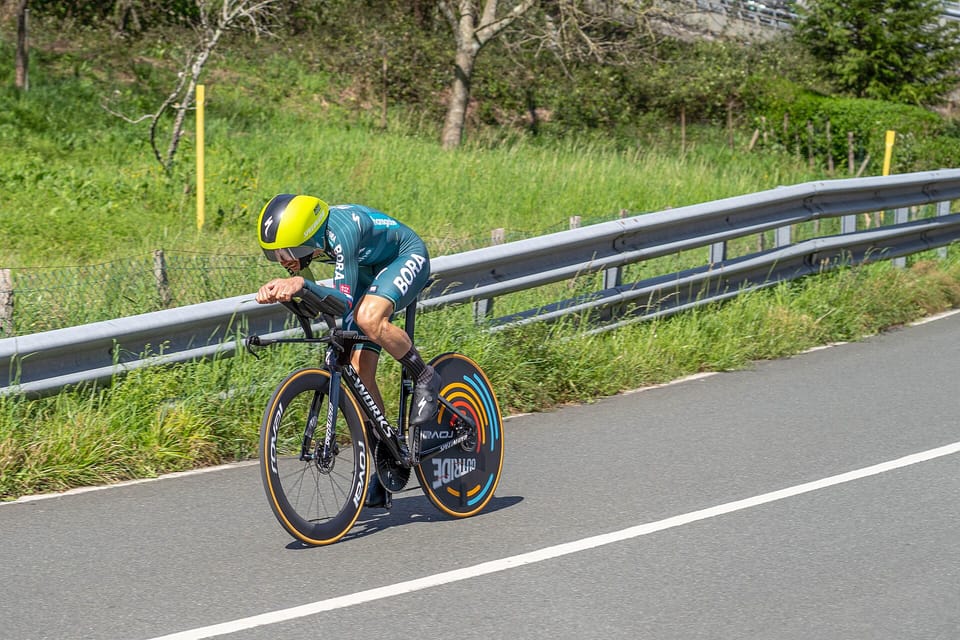
The race against the clock totals 56.9 km. Stage 7 on 14 May is a 19.6 km uphill time trial from Sulmona to Campo di Giove in Abruzzo. Stage 15 on 23 May is a flat 37.3 km test from Monza to Milan, starting inside the Autodromo Nazionale.
Escape Collective’s analysis was that the balance favours all-rounders rather than pure climbers or time-trial specialists, with fewer flat time-trial kilometres than in recent editions.
A demanding first week
The Grande Partenza is the second in Friuli-Venezia Giulia, after a 6.6 km prologue in Trieste in 1981. Stage 1 starts and finishes in Trieste, crosses briefly into Slovenia and has three climbs in the final 40 km. Stage 2, from Ljubljana to Koper, is raced entirely in Slovenia.
The first summit finish comes early. Stage 5 on 12 May, from Filottrano to Sarnano-Sassotetto, is only 139 km long but has 3,300 metres of climbing. The start in Filottrano is a tribute to Michele Scarponi on the tenth anniversary of his death.
After the Campo di Giove time trial and a sixth consecutive finish in Naples, the first block ends on 16 May with a summit finish at Subiaco-Monte Livata, east of Rome.
Circuits, Zeri and Piani di Bobbio
The second week mixes long transfer stages with sharp finishes. The 220 km stage 11 from Gualdo Tadino ends at the Mugello motor racing circuit, the longest day of the race, and stage 4 also finishes on a circuit, at Misano.
Luca Guercilena, RCS Sport’s new chief operating officer and cycling director, linked the circuit finishes to rider safety. “We have included several stage finishes at motor racing circuits, also to draw attention to the issue of safety,” he said in the official announcement.
Stage 12 has a new uphill finish at Zeri in Tuscany, and stage 14 on 22 May, from Cantù to Piani di Bobbio, packs 4,900 metres of climbing into 187 km, including the Madonna del Ghisallo. The Monza–Milan time trial follows the next day.
The final week
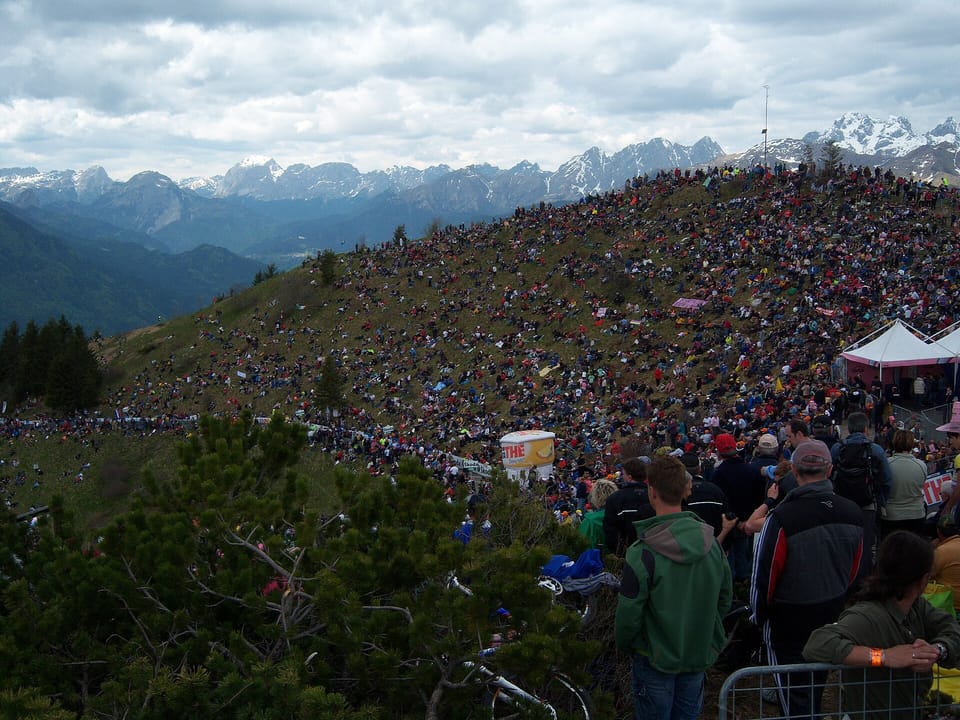
After the second rest day on 24 May, stage 16 is the queen stage. The Mortirolo, designated the Montagna Pantani, is climbed twice, and the Gavia is the Cima Coppi, the highest point of the race. Domestique gave its summit altitude as 2,618 metres. The Gavia has been included ten times, most recently in 2014, and the Mortirolo 17 times, according to RCS figures.
Stage 18 finishes at Madonna di Campiglio, the seventh uphill finish of the race. On 29 May, the penultimate stage from Pordenone ends on Monte Zoncolan, climbed from Ovaro, the side on which Chris Froome won in 2018. It is the Zoncolan’s eighth Giro stage finish and its first since Lorenzo Fortunato won in 2021. Domestique described the final climb as 10.1 km at an average of 11.9 per cent.
The race ends with a 131 km stage in Rome, which hosts the finale for a fifth consecutive year.
“I think the Giro route has been designed very well: it is one of the most beautiful courses of the last ten years,” said Stefano Garzelli, the 2000 winner, in comments published by the organisers.
The women’s Giro d’Italia, also presented on 3 November, starts in Viareggio on 29 May, so its first weekend overlaps with the last two days of the men’s race.